
Recent Posts
- Case Studies: Successful International Businesses Thriving in Canada
- Canada Business Setup FAQs: Everything Non-Residents Need to Know
- Business Relocation Planning: Moving Operations to Canada Smoothly
- Intra-Company Transfer to Canada: A Complete Guide
- Canada’s Investor-Friendly Environment
- Canada’s Multicultural Advantage
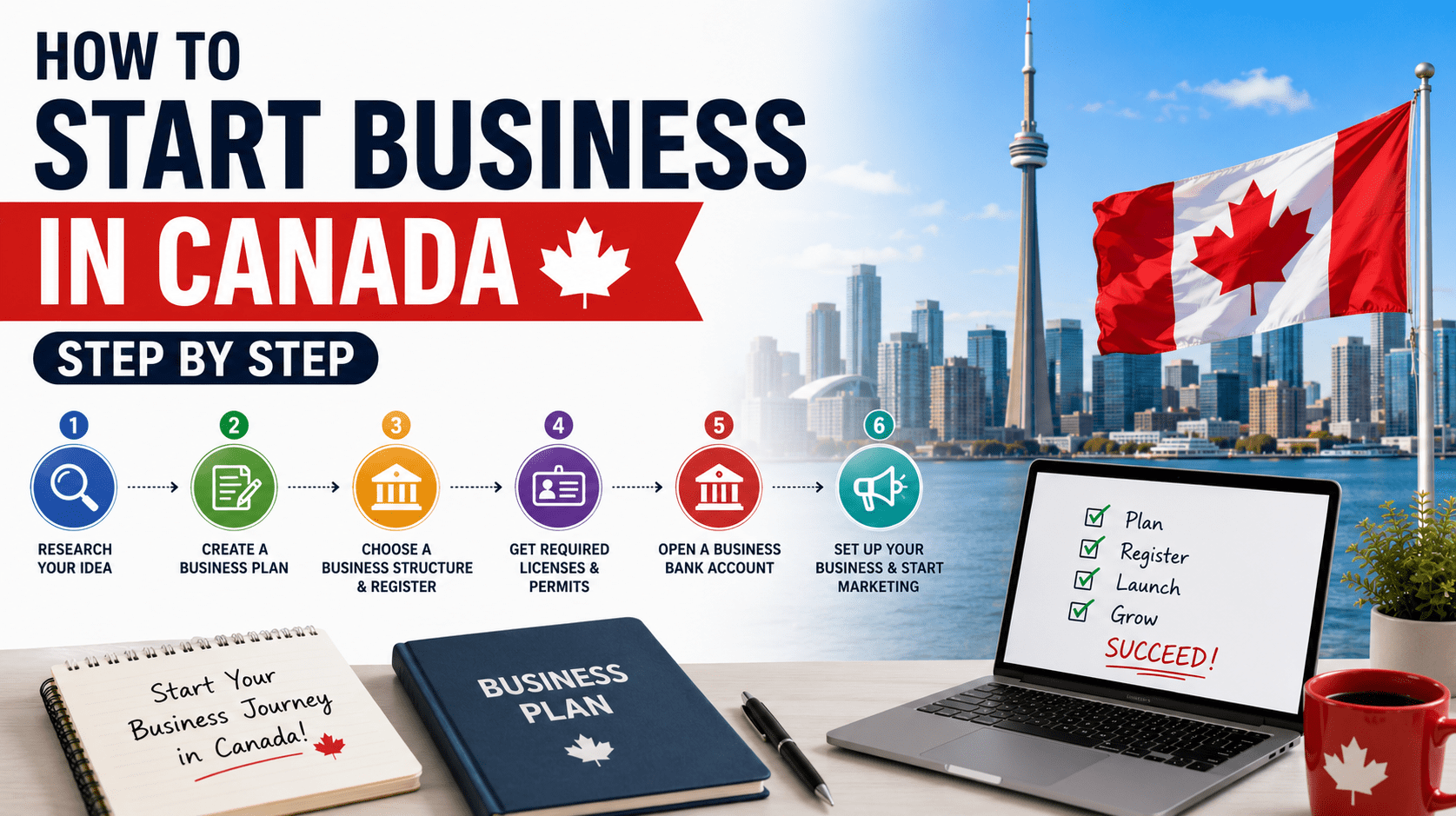
How to Start Business in Canada Step by Step
Thinking about starting a business in Canada? You are not alone. Canada has become one of the top destinations for entrepreneurs because of its stable economy, business-friendly environment, skilled workforce, and access to global markets. Whether you are a local entrepreneur, startup founder, or international business owner, Canada offers excellent opportunities to build and grow a successful company.
However, starting a business involves much more than simply registering a company name. Entrepreneurs must understand legal requirements, taxes, registrations, and financial planning to launch smoothly and remain compliant. Following a step-by-step process can help reduce mistakes and make the setup journey easier.
Step 1: Choose the Right Business Idea
The first step is selecting a business idea that has market demand and long-term growth potential. Before investing money, entrepreneurs should research the industry, competitors, customer needs, and pricing strategies.
A successful business idea should match your skills, experience, and future goals. Proper market research helps entrepreneurs identify opportunities and avoid entering oversaturated markets.
Understanding your target audience early also helps create better marketing and operational strategies later.
Step 2: Create a Business Plan
A business plan acts as the roadmap for your company. It outlines your services, target market, operational strategy, startup costs, financial projections, and growth goals.
A strong business plan helps entrepreneurs stay organized and make informed decisions during the early stages. It can also help attract investors, lenders, or business partners if funding is required.
Planning ahead improves business stability and reduces financial uncertainty during startup operations.
Step 3: Select a Business Structure
Canada offers different business structures, including sole proprietorships, partnerships, and corporations. Choosing the right structure is important because it affects taxes, liability protection, ownership, and future expansion opportunities.
Sole proprietorships are simpler and less expensive to start, while corporations provide stronger liability protection and tax advantages for growing businesses.
Foreign entrepreneurs should also review provincial regulations and director residency requirements before incorporation.
Step 4: Register Your Business
Once the structure is selected, the business must be legally registered. Entrepreneurs may choose federal or provincial incorporation depending on their business goals and operational plans.
The registration process usually includes:
Business name approval, incorporation documents, business number registration, and provincial filings where necessary.
Choosing a unique and professional business name is important for branding and credibility.
Step 5: Apply for Required Licenses and Permits
Some businesses in Canada require specific licenses or permits before operations can begin. Requirements vary based on the industry, province, and municipality.
Businesses involved in food services, healthcare, transportation, construction, or finance may require additional approvals or certifications.
Checking legal requirements early helps businesses avoid penalties and operational delays.
Step 6: Open a Business Bank Account
Separating business and personal finances is essential for accounting and tax purposes. Opening a business bank account helps businesses maintain organized financial records and improve professionalism.
Banks generally require incorporation documents, identification, and registration certificates during the account opening process.
For foreign entrepreneurs, banking requirements may vary depending on the financial institution and business setup.
Step 7: Register for Taxes
Businesses operating in Canada may need GST/HST registration depending on their revenue and activities. Businesses hiring employees must also establish payroll accounts for tax deductions and employee contributions.
Understanding tax obligations from the beginning helps businesses remain compliant and avoid penalties later.
Professional accounting support can also simplify tax management and financial reporting.
Step 8: Set Up Accounting and Bookkeeping
Proper bookkeeping is one of the most important parts of running a successful business. Entrepreneurs should maintain records for sales, expenses, payroll, invoices, and tax filings.
Organized accounting systems help businesses monitor profitability, manage taxes, and make informed financial decisions.
Many startups use accounting software, while growing companies often work with professional accountants for ongoing support.
Step 9: Build Your Online Presence
A professional online presence is essential in today’s digital market. Businesses should create a website, establish social media profiles, and develop branding strategies before launching services.
Digital marketing, SEO, and local search visibility can help businesses attract customers and grow faster.
Even traditional businesses now rely heavily on online visibility to compete effectively in the Canadian market.
Step 10: Launch and Grow Your Business
Once the legal, financial, and operational setup is complete, businesses can officially begin operations. Entrepreneurs should continue monitoring finances, customer feedback, and market trends to improve business performance over time.
Growth requires continuous learning, marketing, and adaptation. Businesses that remain organized and customer-focused often perform better in competitive markets.
Professional guidance can also help businesses scale more efficiently as operations expand.
Conclusion
Starting a business in Canada can be a rewarding opportunity for entrepreneurs willing to plan carefully and follow the proper steps. From choosing the right business structure and registering taxes to building a strong online presence, every stage plays an important role in long-term success.
Canada offers excellent opportunities for startups and international entrepreneurs because of its stable economy and supportive business environment. With proper planning, legal compliance, and financial preparation, entrepreneurs can successfully build and grow businesses in Canada.
Ready to start your Canadian business journey? Contact Complete Consulting Canada today for professional guidance and personalized business setup support.
Frequently Asked Questions
Yes, foreigners can legally own and operate businesses in Canada depending on provincial regulations and business structures.
No, businesses can operate as sole proprietorships, partnerships, or corporations depending on their needs and goals.
The timeline depends on the business structure, province, and registration process selected.
GST/HST registration becomes mandatory once revenue exceeds the required threshold, although voluntary registration is possible earlier.
Yes, a business plan helps entrepreneurs organize operations, plan finances, and prepare for long-term growth.
Professional guidance can help businesses avoid legal, tax, and compliance mistakes during the setup process.