
Recent Posts
- Company Setup in Canada for Non-Residents: A Complete Guide
- Doing Business in Canada: A South African Executive’s Guide
- How to Start a Business in Canada: A Complete Guide
- Business Banking in Canada for South African Company Owners
- Business Services in Canada: A Complete Guide for Entrepreneurs
- Opening a Corporation in Canada as a South African Citizen
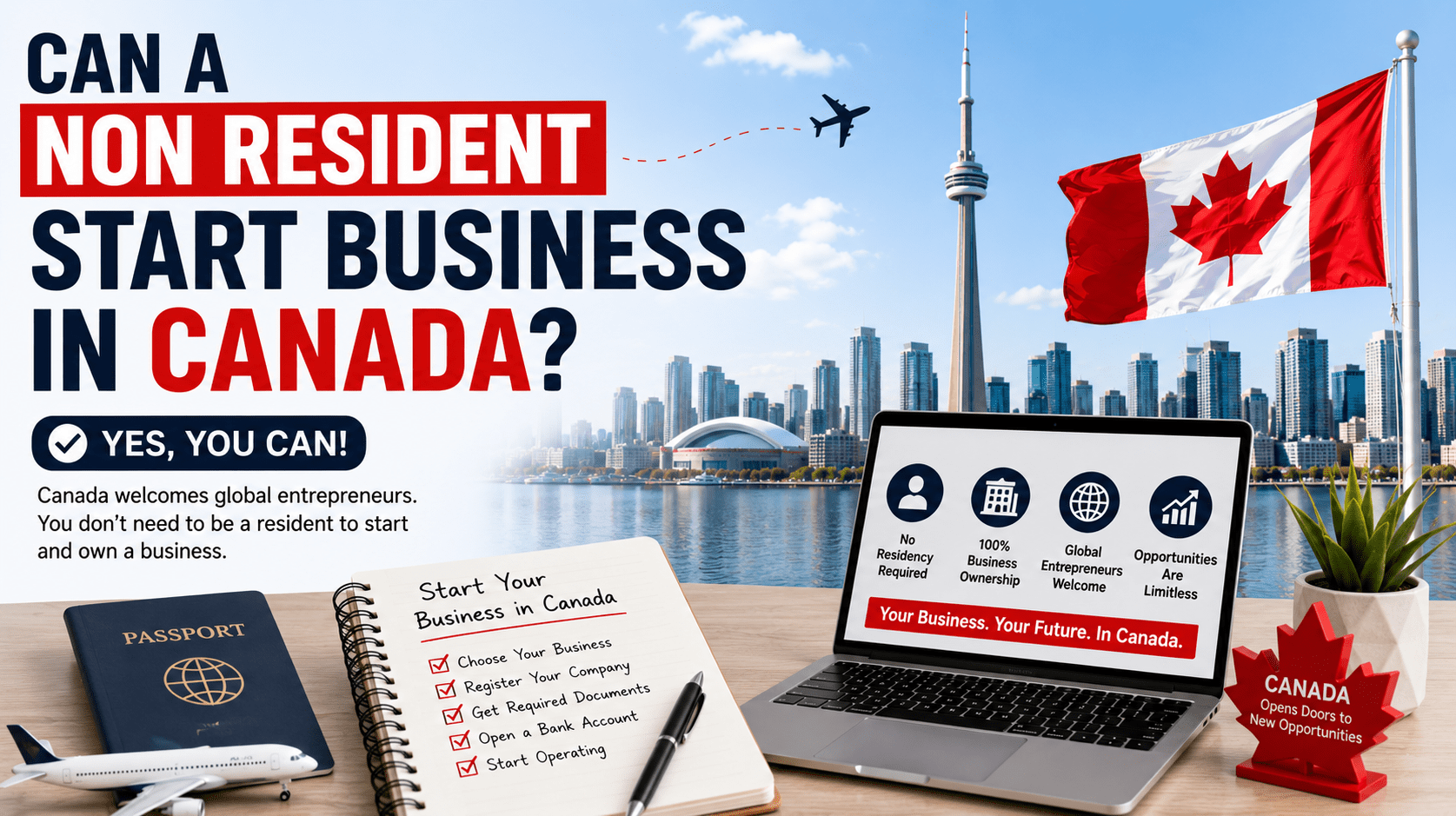
Yes — non-residents can legally start and own businesses in Canada, and many international entrepreneurs are already doing it successfully. Canada has become one of the world’s most attractive destinations for startups and global business expansion because of its stable economy, international reputation, and business-friendly environment.
Whether you are an entrepreneur, investor, consultant, or online business owner living outside Canada, you can still establish a Canadian company and manage operations remotely in many cases. From technology startups to e-commerce brands and consulting firms, non-residents are increasingly choosing Canada as a gateway to international markets.
Why Canada Attracts Non-Resident Entrepreneurs
Canada offers several advantages for international business owners. The country has a strong legal system, transparent regulations, advanced banking infrastructure, and access to North American and global markets.
A Canadian company can improve business credibility and help entrepreneurs build stronger relationships with international clients, suppliers, and investors. Many non-residents also choose Canada because it provides long-term opportunities for expansion and global business growth.
Canada’s multicultural and innovation-driven environment makes it especially attractive for entrepreneurs looking to operate internationally.
Can Non-Residents Legally Own a Canadian Company?
Yes, non-residents can legally own Canadian businesses. Depending on the province, foreign entrepreneurs may own 100% of a corporation without becoming Canadian citizens or permanent residents.
However, rules may vary across provinces. Some provinces have director residency requirements, while others allow complete foreign ownership without requiring Canadian resident directors.
Because regulations differ, choosing the right province for incorporation is an important step for non-resident business owners.
Types of Businesses Non-Residents Commonly Start
Non-residents operate businesses across many industries in Canada. Technology services, digital marketing agencies, e-commerce stores, consulting firms, import-export companies, trucking businesses, and education consulting services are among the most common sectors.
Online and remote businesses are especially popular because they can often be managed internationally with lower operational costs.
Many entrepreneurs use Canadian incorporation to establish a professional international business presence while continuing to live in their home country.
Steps to Start a Business in Canada as a Non-Resident
The process usually begins by selecting the appropriate business structure and province for incorporation. Entrepreneurs may choose sole proprietorships, partnerships, or corporations, although corporations are often preferred for liability protection and long-term growth.
Business setup generally includes:
Choosing a business name, incorporation registration, obtaining a CRA business number, tax registration, opening a business bank account, and setting up accounting systems.
Depending on the industry, additional permits or licenses may also be required before operations begin.
Many non-resident entrepreneurs work with incorporation consultants, accountants, or legal professionals to ensure proper setup and compliance.
Can Non-Residents Run Canadian Businesses Remotely?
Yes, many non-resident entrepreneurs successfully operate Canadian companies remotely from their home countries. Digital tools now make it easier to manage customer service, marketing, operations, accounting, and communication online.
Some businesses may require a Canadian mailing address, virtual office, or local representative depending on operational needs and banking requirements.
Remote business management has become increasingly common, especially for online businesses and service-based companies.
Banking and Tax Considerations
Opening a Canadian business bank account may involve additional documentation for non-residents. Some banks may require in-person verification, while others support remote onboarding processes depending on the business structure.
Non-resident businesses may also have Canadian tax obligations. Depending on the company’s activities, businesses may need corporate tax filings, GST/HST registration, payroll accounts, and ongoing bookkeeping support.
Because international taxation can become complex, professional accounting guidance is highly recommended.
Challenges Non-Residents Should Consider
While Canada offers excellent opportunities, non-resident entrepreneurs may face challenges related to banking, compliance requirements, taxation, and provincial regulations.
Understanding local laws and maintaining accurate financial records are essential for long-term business success. Entrepreneurs should also ensure they meet annual filing and reporting obligations to avoid penalties or compliance issues.
Working with experienced consultants can help simplify the process and reduce potential risks.
Benefits of Starting a Canadian Business as a Non-Resident
A Canadian company can help non-residents improve international credibility, access global markets, and create stronger business opportunities. Canada’s stable economy and strong corporate reputation also make it easier to build trust with international customers and investors.
For many entrepreneurs, Canadian incorporation becomes an important step toward building a global brand and expanding internationally.
Businesses also benefit from Canada’s strong banking systems, skilled workforce, and supportive business environment.
Conclusion
Yes, non-residents can absolutely start and operate businesses in Canada. With the right business structure, proper compliance, and professional support, international entrepreneurs can successfully build Canadian companies while managing operations remotely.
Canada continues to attract global entrepreneurs because of its stable economy, international reputation, and business-friendly environment. Whether your goal is international expansion, increased credibility, or long-term growth, Canada provides excellent opportunities for non-resident business owners.
Ready to start your business in Canada? Contact Complete Consulting Canada today for professional guidance on business incorporation, registration, accounting, taxation, and ongoing business support.
Frequently Asked Questions
Yes, non-residents can legally own and operate businesses in Canada depending on provincial regulations and business structures.
No, permanent residency or citizenship is not required to start a business in Canada.
Yes, many entrepreneurs successfully manage Canadian companies remotely using online tools and professional support services.
Corporations are commonly preferred because they offer liability protection and stronger long-term growth opportunities.
Businesses may need GST/HST registration depending on their revenue and activities in Canada.
Yes, professional support can help simplify incorporation, taxation, banking, and compliance requirements.