
Recent Posts
- How to Start a Small Business in Canada
- Best Canadian Industries for South African Investors
- Canada Business Opportunities: Building a Business for Long-Term Growth
- Canadian Business Registration for South African Residents
- How to Incorporate a Canadian Company Remotely from South Africa
- A South African Entrepreneur’s Roadmap to Canadian Company Formation
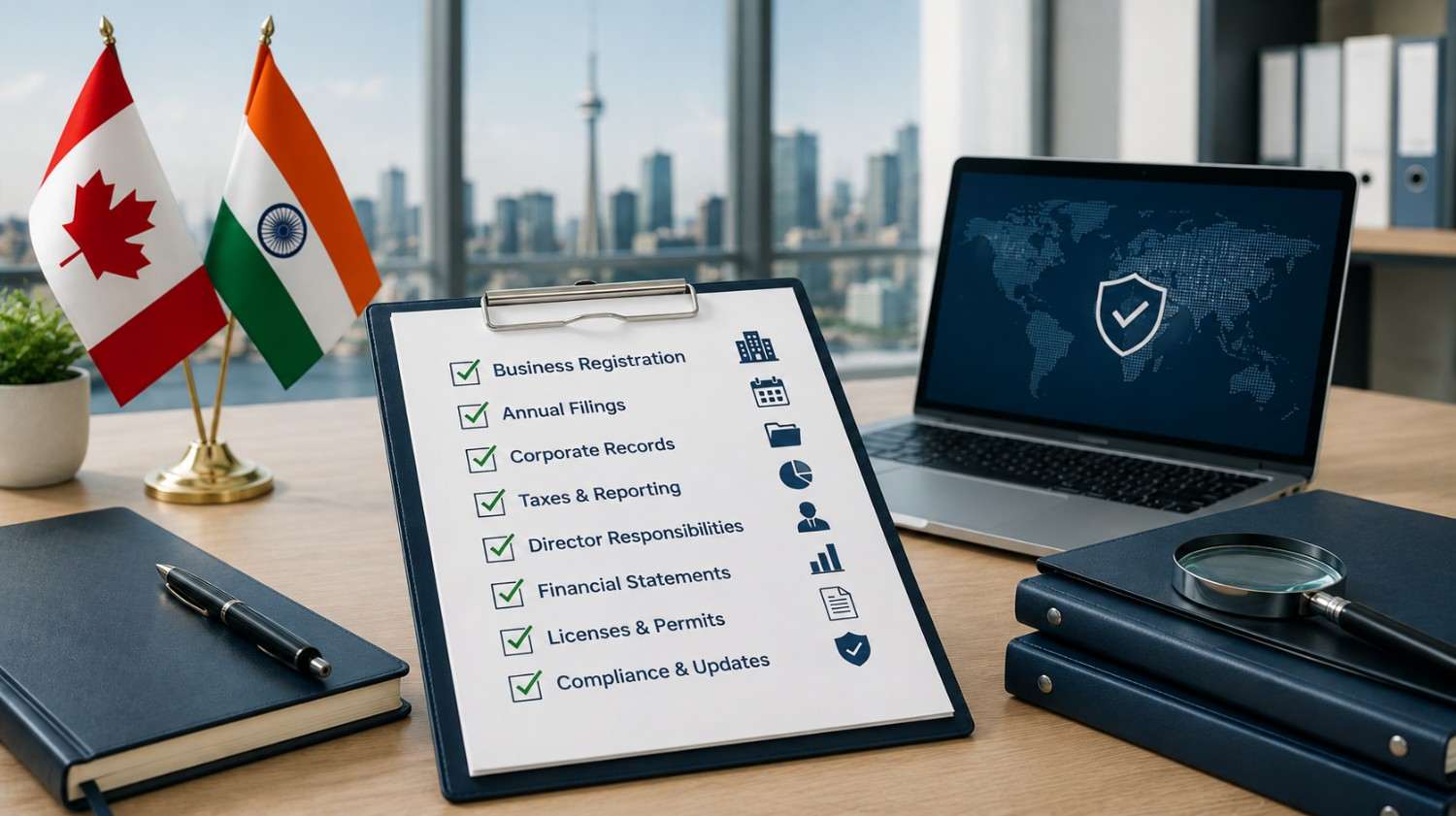
Corporate Compliance Checklist for Non-Resident Canadian Companies Owned from India
Owning a Canadian company while managing the business from India can create valuable opportunities for entrepreneurs serving customers across Canada and the USA. However, maintaining the company after incorporation is just as important as setting it up. A well-organized corporate compliance process helps keep company records, tax filings, registrations, financial information, and reporting responsibilities current.
For Indian entrepreneurs with a Canadian company, compliance can become more complex because the business may involve cross-border ownership, international payments, Canadian customers, Indian operations, and transactions between related parties. Understanding the recurring responsibilities can make ongoing management much smoother.
Maintain Accurate Corporate Records
A Canadian corporation should maintain organized corporate records throughout the year. These records can include incorporation documents, shareholder information, director information, resolutions, registers, financial statements, and important company agreements.
For an Ontario corporation, annual corporate reporting requirements should also be monitored. Ontario’s Corporations Information Act requires corporations to file an annual return, subject to applicable exemptions.
When ownership and management are based in India, keeping digital copies of corporate records and maintaining an organized Canadian corporate file can make annual administration easier.
Keep the Company Information Updated
Changes to directors, officers, registered information, ownership details, or other corporate information should be reviewed and updated when required. Delaying corporate updates can create inconsistencies between company records, banking information, tax accounts, and other business documents.
For an Indian-owned Canadian company, it is especially important that the information held by the corporation remains consistent across Canadian and Indian business records.
Monitor Canadian Corporate Tax Filing Requirements
Tax compliance is one of the most important areas for a Canadian company owned from India. Depending on the company’s residency, activities, income, and structure, a Canadian corporate income tax return may be required.
A corporation carrying on business in Canada generally has T2 filing responsibilities, and the return is normally due within six months of the end of the corporation’s tax year. Certain non-resident corporations may also have T2 filing obligations when they carry on business in Canada or meet other specified conditions.
This means that an Indian owner should not assume that having no Canadian tax payable automatically means there is no filing requirement.
Review GST/HST Responsibilities
GST/HST should be reviewed according to the company’s activities, customers, revenue, and registration status. If a business is registered for GST/HST, it has responsibilities that include charging and collecting applicable tax, filing GST/HST returns, and remitting amounts collected.
This can be particularly important for Indian entrepreneurs operating Canadian eCommerce stores, consulting companies, technology businesses, agencies, and other service-based companies.
Separate Canadian and Indian Business Transactions
Cross-border financial management should be handled carefully. Canadian revenue, Indian operating expenses, transfers between related businesses, shareholder transactions, and international payments should be properly documented.
A dedicated accounting system can help distinguish Canadian company transactions from the owner’s personal finances and from transactions involving an Indian business.
For businesses with connected entities in India and Canada, transaction documentation and appropriate accounting treatment become increasingly important as the company grows.
Understand Corporate Residency Considerations
Corporate residency is an important consideration for businesses managed across borders. Incorporation in Canada and the location from which the company is managed can have different implications.
The CRA explains that corporate residency can involve statutory rules as well as common-law principles, and treaty provisions can become relevant when dual-residency questions arise.
For an Indian entrepreneur who owns and manages a Canadian company from India, this area should be reviewed carefully with qualified cross-border accounting professionals so that the Canadian and Indian reporting positions remain coordinated.
Keep Financial Statements and Accounting Up to Date
Good bookkeeping is the foundation of ongoing corporate compliance. Monthly or quarterly bookkeeping can help track revenue, expenses, receivables, payables, shareholder transactions, international transfers, and tax-related amounts.
Maintaining current financial records also makes year-end accounting and corporate tax preparation more efficient. It can help business owners understand whether the company is profitable and identify financial issues before they become larger problems.
Review Payroll and Payment Obligations
If the Canadian company employs workers or pays individuals for services, payroll and related reporting requirements should be reviewed according to the company’s circumstances.
The same applies when the company makes payments to non-residents. Cross-border payments can have specific reporting or withholding considerations, so the nature of each payment should be properly documented before it is processed.
Prepare for Annual Compliance in Advance
Compliance should not be treated as a once-a-year activity. A better approach is to maintain a recurring corporate calendar covering annual corporate filings, tax deadlines, GST/HST reporting periods, bookkeeping, financial statements, corporate record updates, and other applicable reporting dates.
For Indian owners, planning ahead is particularly valuable because Canadian and Indian financial years, accounting processes, and reporting requirements may not always align.
Keep Your Canadian Company Compliance-Ready
Maintaining a Canadian company from India requires more than completing the initial incorporation process. Regular corporate record maintenance, annual reporting, tax filings, GST/HST reviews, bookkeeping, financial documentation, and cross-border accounting coordination can help create a stronger foundation for long-term growth across Canada and the USA.
Complete Consulting Canada helps entrepreneurs and international business owners understand Canadian company setup, corporate administration, accounting coordination, and ongoing business requirements. If your Canadian company is owned or managed from India, establishing a consistent compliance process can help you stay organized while focusing on business growth.
Frequently Asked Questions
Yes, an Indian resident can own a Canadian company, subject to the applicable corporate structure and requirements. The ongoing responsibilities depend on the company’s activities, ownership, management, and tax position.
Potentially, yes. Canadian and provincial corporate reporting requirements can apply depending on the company’s structure and jurisdiction. Ontario corporations, for example, generally have annual return requirements.
A non-resident corporation may need to file a T2 return when it carries on business in Canada, disposes of taxable Canadian property, has a taxable capital gain, or meets other applicable filing conditions.
It can. GST/HST responsibilities depend on the company’s activities, registration status, taxable supplies, revenue, and other factors. Registered businesses have specific collection and filing responsibilities.
Yes. Keeping clear records for Canadian and Indian business activities makes accounting, financial reporting, cross-border transaction tracking, and tax preparation considerably easier.
It can raise important cross-border residency considerations. Corporate residency can involve incorporation, management and control, statutory rules, and applicable treaty provisions.
A structured compliance calendar, accurate bookkeeping, organized corporate records, timely tax reporting, and professional cross-border accounting support can help Indian entrepreneurs manage their Canadian companies more efficiently.