
Recent Posts
- Company Setup in Canada for Non-Residents: A Complete Guide
- Doing Business in Canada: A South African Executive’s Guide
- How to Start a Business in Canada: A Complete Guide
- Business Banking in Canada for South African Company Owners
- Business Services in Canada: A Complete Guide for Entrepreneurs
- Opening a Corporation in Canada as a South African Citizen
How to Start Your Own Business in Ontario as a Non-Resident from India
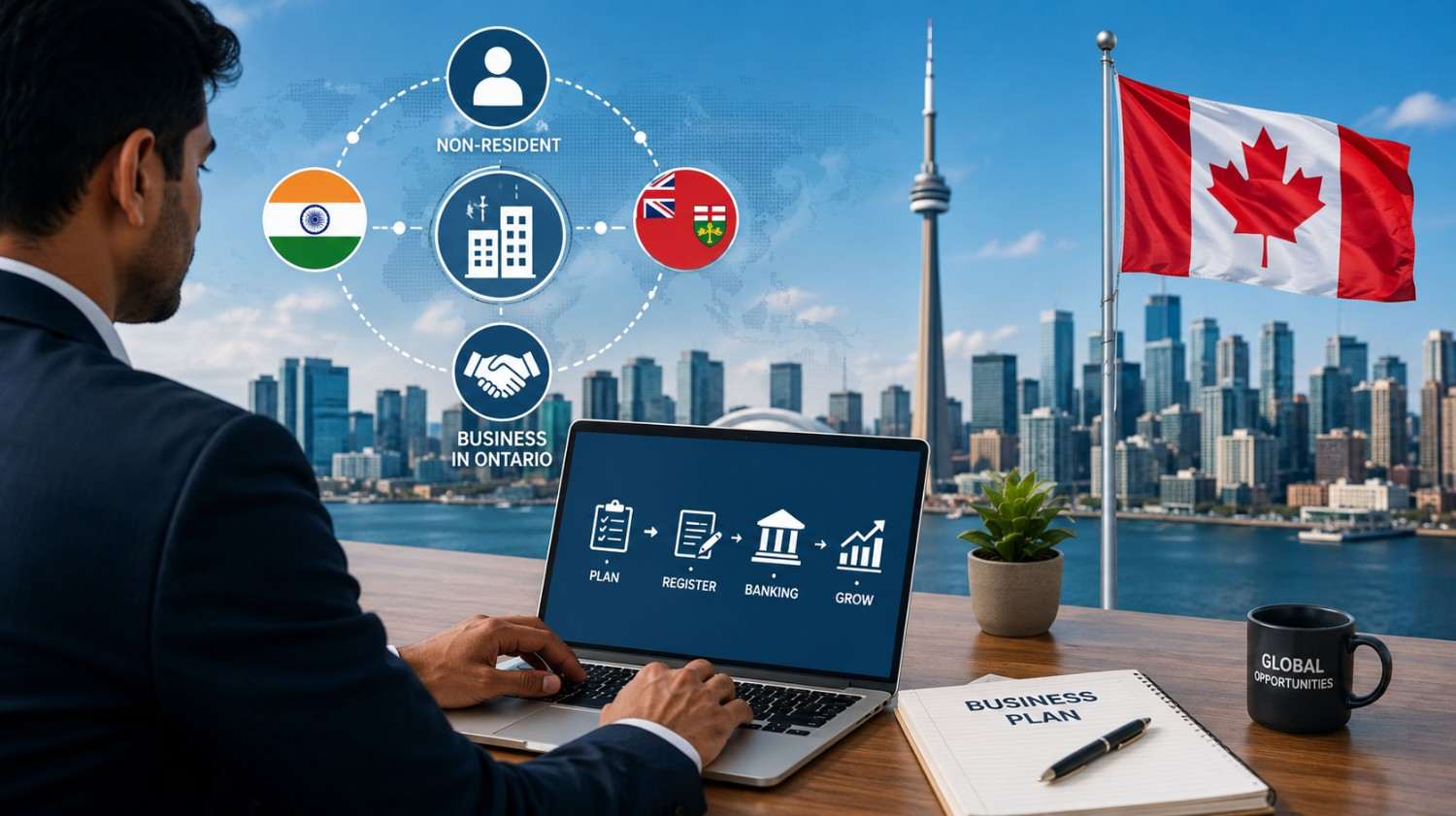
Starting a business in Ontario from India can be an attractive way to reach Canadian customers, build an international company, and expand into the Canada and USA markets. For Indian entrepreneurs, the process involves choosing the right business structure, preparing incorporation information, understanding Canadian tax responsibilities, and establishing an efficient operating framework.
The good news is that being based in India does not automatically prevent you from establishing a business presence in Ontario. However, the requirements can differ depending on whether you create an Ontario corporation, establish a federal corporation, or register an existing Indian company to operate in Canada.
Choosing the Right Business Structure in Ontario
The first important decision is selecting an appropriate business structure. Entrepreneurs commonly consider an Ontario corporation or a federal corporation depending on their intended market and long-term expansion plans.
Ontario incorporation can be suitable when your primary business operations are focused within Ontario. A federal corporation may be more appropriate when you expect to operate across multiple Canadian provinces. A federally incorporated company can operate in Ontario, although additional provincial registrations may be required when conducting business in particular provinces.
For an Indian entrepreneur, this decision should be made alongside an assessment of ownership, management, banking, taxation, business activities, and future expansion.
Can an Indian Resident Own a Business in Ontario?
An entrepreneur living in India can explore establishing a Canadian business structure without being physically based in Ontario. However, ownership and director requirements depend on the structure selected.
Ontario’s corporate rules have specific provisions concerning director residency, including exceptions and provisions for corporations classified as non-resident corporations. Because the rules can depend on the corporation’s circumstances, it is important to determine the applicable structure before incorporation.
This is particularly important for Indian founders who want to retain ownership and management from India while building a Canadian commercial presence.
Registering the Business and Obtaining a Business Number
Once the structure has been selected, the next stage involves business registration and obtaining the appropriate identification and tax accounts.
Ontario’s online business registration system provides registration services for business corporations. A corporation registration currently carries a listed fee of $300, while a name-based corporation may also require an Ontario-biased or weighted Nuans name search report.
A Canadian Business Number, commonly called a BN, is also important for businesses that need federal tax program accounts. The Canada Revenue Agency provides a specific registration process for businesses located outside Canada and for non-resident businesses conducting activities in Canada. Depending on the business, accounts such as corporation income tax, GST/HST, payroll, or import/export may be relevant.
Understanding Tax Responsibilities Between India and Canada
Cross-border taxation should be considered before starting operations. An Indian-owned Canadian business can have Canadian tax obligations depending on its corporate structure, income, activities, and where business management and operations occur.
Canada and India have an income tax treaty designed to address taxation issues between the two countries. The treatment of business profits can depend on factors such as whether business activities create a permanent establishment in Canada.
Corporate residency can also involve more than simply where a company was incorporated. The CRA explains that factors such as central management and control can be relevant when determining corporate residency.
For this reason, Indian entrepreneurs should plan their Canadian and Indian accounting arrangements before generating significant revenue.
Setting Up Banking, Accounting and Business Operations
After establishing the company, practical operations become the next priority. Depending on the business model, you may need a Canadian business bank account, accounting system, payment processing, bookkeeping support, insurance, contracts, suppliers, employees, or Canadian service providers.
Your operating model should clearly separate personal finances from company finances and maintain accurate records of Canadian and international transactions. If your business sells products or services to customers in Canada, GST/HST requirements should also be reviewed according to the nature and scale of your activities. Non-resident businesses can have specific GST/HST considerations, particularly when they have business activities or a permanent establishment in Canada.
Building a Business That Can Grow Across Canada and the USA
Ontario can provide an excellent starting point for entrepreneurs targeting Canadian customers while also planning expansion into the USA. A strong business foundation should include a clear market strategy, professional website, Canadian payment options, appropriate accounting processes, customer support, and a scalable digital marketing strategy.
For Indian founders, it is also valuable to create a business structure that supports international invoicing, cross-border payments, supplier relationships, eCommerce, consulting services, technology services, or other commercial activities without unnecessary complexity.
Start Your Ontario Business With the Right Foundation
Starting a business in Ontario from India is an opportunity to build a Canadian commercial presence while serving customers across Canada and potentially expanding into the USA. The right approach begins with selecting a suitable structure, organizing registration and tax requirements, establishing efficient financial systems, and creating a practical cross-border business strategy.
Complete Consulting Canada helps entrepreneurs understand the Canadian business setup process and plan their business structure, registration, accounting coordination, and expansion strategy. If you are an Indian entrepreneur planning to start a business in Ontario, working with experienced Canadian business consultants can help you approach the process with greater clarity and confidence.
Frequently Asked Questions
Yes, an Indian resident can explore establishing a business presence in Ontario without being physically based there. The appropriate corporate structure and applicable requirements depend on the nature of the business and ownership arrangement.
Not necessarily. Ownership and residency considerations are separate from simply being an entrepreneur who lives in India. The specific corporate structure should be reviewed before registration.
It depends on your growth plans. Ontario incorporation can work well for an Ontario-focused business, while federal incorporation can be attractive for businesses planning operations across Canada.
A Business Number may be required when a business needs applicable Canadian tax or program accounts. Non-resident businesses have a dedicated registration process for obtaining a BN and relevant accounts.
Potentially, yes. Tax treatment depends on the company’s structure, activities, residency, income, and other factors. The Canada-India tax treaty may also affect how cross-border business income is treated.
Yes. A properly structured business can develop customers across Canada and expand internationally, although additional registrations, tax considerations, and commercial requirements may apply depending on where and how it operates.
Before registration, founders should clarify their business model, ownership structure, expected Canadian activities, taxation considerations, banking requirements, and expansion plans. Getting the structure right at the beginning can make future growth considerably easier.