
Recent Posts
- How to Start a Small Business in Canada
- Best Canadian Industries for South African Investors
- Canada Business Opportunities: Building a Business for Long-Term Growth
- Canadian Business Registration for South African Residents
- How to Incorporate a Canadian Company Remotely from South Africa
- A South African Entrepreneur’s Roadmap to Canadian Company Formation
The Canadian Business Guide to Reliable Product Sourcing and Importing from India
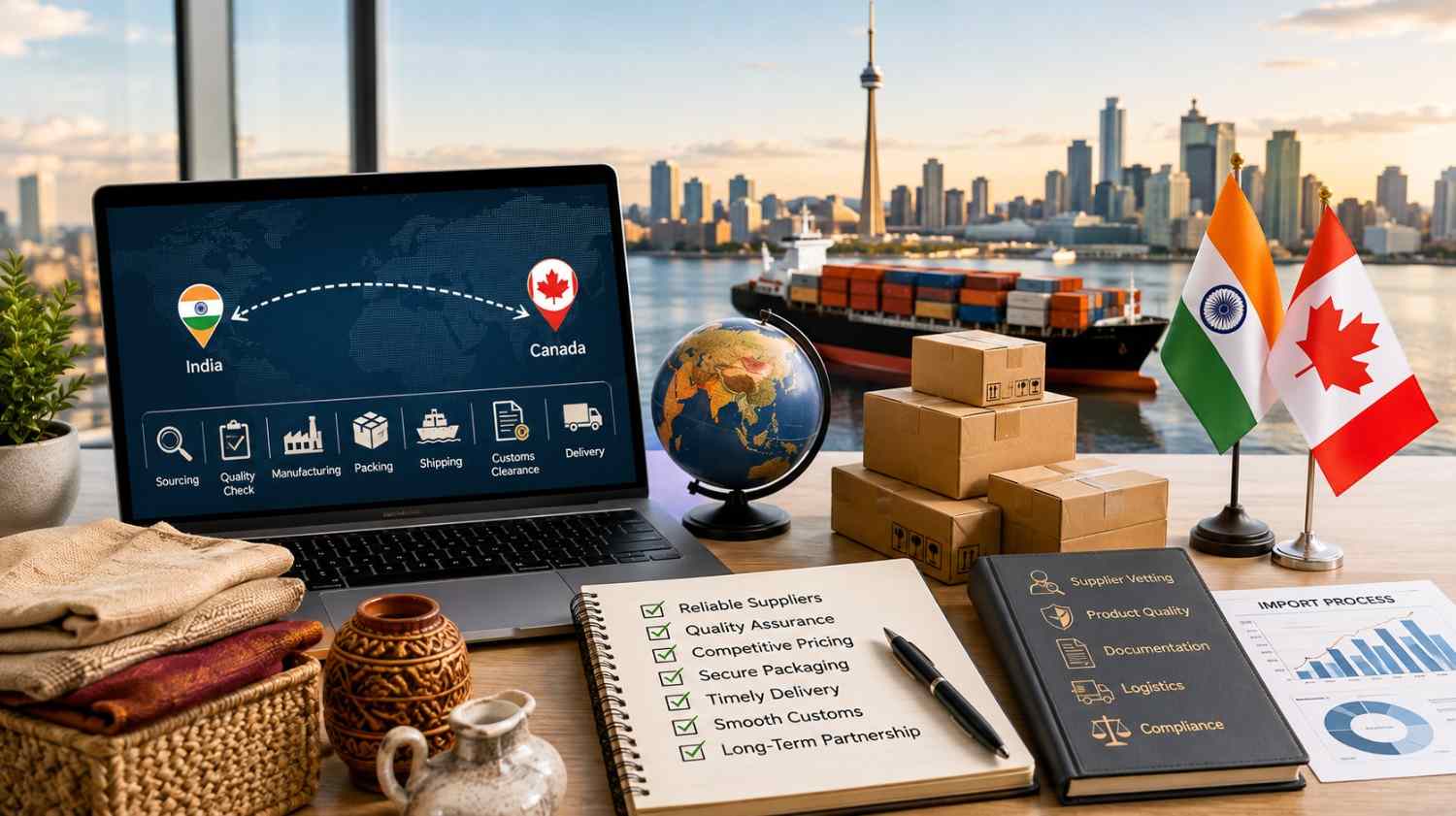
For Canadian businesses looking to expand their product range, sourcing from India can provide access to established manufacturing capabilities across textiles, apparel, home products, handicrafts, packaging, specialty goods and other categories. However, successful importing requires more than finding an attractive supplier price.
A reliable India-to-Canada sourcing strategy should consider supplier verification, product specifications, quality control, shipping, landed costs, documentation, inventory planning and Canadian customer demand. Businesses that carefully manage each stage can build a supply chain that supports consistent product availability and sustainable growth.
India’s large manufacturing ecosystem can be particularly valuable for Canadian entrepreneurs who already understand specific product categories or have established relationships with manufacturers and exporters. Complete Consulting Canada also identifies sourcing, distribution and logistics as potential business opportunities for entrepreneurs with relevant supplier relationships in India.
Understanding the Canadian Product Sourcing Process
Reliable product sourcing begins with understanding the Canadian market before contacting suppliers. A business should know who its customers are, what products they need, what competitors offer and what price range the market can support.
Once the product opportunity is clear, businesses can identify suitable Indian manufacturers or exporters. Supplier selection should consider production capabilities, product quality, communication, capacity, experience and ability to meet agreed specifications.
A detailed product specification is essential. Materials, dimensions, colours, finishes, packaging, labelling and other requirements should be clearly documented so both the Canadian buyer and Indian supplier have the same expectations.
Finding Reliable Indian Suppliers
India has manufacturing and trading clusters serving numerous industries. Canadian businesses can research potential suppliers through established business networks, trade directories, industry events, referrals and direct manufacturer outreach.
Price should not be the only deciding factor. A supplier offering the lowest quotation may not provide the consistency, communication or production capacity required for a long-term Canadian business.
Before placing a commercial order, businesses should evaluate supplier credentials, request product samples and discuss production timelines. Clear communication during the early stages can reveal whether the supplier is capable of handling ongoing business requirements.
Product Samples and Quality Control
Quality control should begin before production rather than after the shipment reaches Canada.
A product sample allows the buyer to evaluate materials, workmanship, dimensions, appearance and packaging. Once the specifications are approved, the production requirements should be documented clearly.
For larger or recurring shipments, businesses can establish quality checkpoints during manufacturing and conduct a final inspection before dispatch. This can help identify defects, incorrect quantities or packaging problems before products leave India.
Consistent quality is particularly important for Canadian retailers and eCommerce businesses because customer reviews, returns and repeat purchases can directly affect profitability.
Calculating the Landed Cost
The supplier quotation is only one part of the final product cost. Canadian businesses should calculate the complete landed cost before deciding whether an imported product is commercially viable.
Depending on the transaction, the calculation can include the product purchase price, packaging, transportation within India, international freight, insurance where applicable, applicable duties and taxes, customs-related charges, Canadian transportation, warehousing and fulfillment expenses.
A detailed landed-cost calculation provides a more realistic view of potential margins. It can also help businesses compare suppliers and determine an appropriate Canadian selling price.
Choosing Shipping and Logistics Options
Transportation decisions should reflect the product, shipment size, delivery timeline and available budget.
Ocean freight can be suitable when businesses are planning larger shipments and can accommodate longer transit times. Air freight can be useful when faster delivery is important or when products have a higher value relative to their shipment weight.
Canada’s extensive transportation infrastructure provides access to ports, airports, rail networks, highways and distribution centres. Complete Consulting Canada’s supply-chain analysis highlights Vancouver, Montreal and Halifax among Canada’s important international logistics gateways and identifies major Canadian logistics hubs supporting warehousing and distribution.
The right logistics model should be selected before ordering inventory rather than after the goods are already in transit.
Import Documentation and Planning
Importing products into Canada requires accurate commercial and shipping documentation. Businesses should understand the documentation associated with their products and shipment before goods leave India.
Product classification is also an important part of import planning because applicable duties and requirements can depend on the nature and classification of the goods.
Businesses should also understand their responsibilities as importers and seek qualified customs or trade assistance where the product or shipment requires specialized expertise. Proper preparation can help reduce avoidable delays and unexpected costs.
Canadian Warehousing and Inventory Management
Once products arrive in Canada, businesses need a plan for storage and distribution. The right warehouse location can influence transportation costs and customer delivery times.
Inventory planning should consider supplier lead times, transportation schedules, seasonal demand and expected sales. Too much inventory can tie up working capital, while insufficient inventory can result in missed sales and customer dissatisfaction.
For eCommerce businesses, warehousing should also be connected to order processing and fulfillment. Complete Consulting Canada notes that Canadian third-party logistics providers can offer services such as warehousing, pick-and-pack, shipping and returns management.
Selecting Products for the Canadian Market
Successful importing starts with choosing products that have a genuine market opportunity. A product may be popular in India but still require different positioning for Canadian customers.
Businesses should research Canadian customer preferences, competitors, price points and product presentation before committing to inventory. Packaging, sizing, materials and product features may need to be adapted according to Canadian market expectations.
For Indian entrepreneurs with established supplier relationships, this can also create a business opportunity around sourcing and distribution. Complete Consulting Canada notes that entrepreneurs who understand both Indian suppliers and Canadian customer requirements can explore specialized sourcing businesses connecting Indian manufacturers with Canadian retailers and commercial buyers.
Building Long-Term Supplier Relationships
Reliable importing is easier when supplier relationships are managed for the long term. Buyers should establish clear expectations around product specifications, production schedules, packaging, quality standards and communication.
Regular performance reviews can help businesses identify whether suppliers are meeting agreed expectations. Quality consistency, delivery reliability, responsiveness and production capacity should all be considered when evaluating an ongoing supplier relationship.
A strong relationship can also make future product development and order planning more efficient.
Growing an India-to-Canada Sourcing Business
Canadian businesses can build sourcing models around direct retail sales, eCommerce, distribution, private-label products or supplying other Canadian businesses. The most appropriate model depends on the product category, target customer and available operational resources.
Complete Consulting Canada’s business resources highlight product businesses, import and distribution services and logistics as potential opportunities for entrepreneurs with relevant experience and established supplier relationships.
The strongest approach is to combine dependable Indian suppliers with a clearly defined Canadian market strategy, realistic financial planning and reliable logistics.
How Complete Consulting Canada Supports Canadian Business Expansion
Complete Consulting Canada supports entrepreneurs and international businesses establishing and growing operations in Canada. Its services cover areas including business setup, market entry, eCommerce and retail, logistics and supply-chain activities.
For entrepreneurs planning to source products from India and build a Canadian business, the company can provide broader support around Canadian business setup, market-entry strategy and operational planning.
Reliable product sourcing is ultimately a process rather than a single supplier decision. By researching Canadian demand, evaluating Indian suppliers, confirming product quality, calculating landed costs, planning logistics and managing inventory carefully, businesses can create a stronger India-to-Canada supply chain.
Frequently Asked Questions
Canadian businesses can source many product categories from India, including textiles, apparel, home products, handicrafts, packaging, specialty consumer goods and industrial products. The most suitable products depend on Canadian demand, competition and supplier capabilities.
Businesses can research manufacturers and exporters through established industry networks, trade directories, referrals and direct supplier outreach. Samples, company information, production capabilities and communication should be reviewed before placing an order.
Businesses should evaluate supplier reliability, product specifications, samples, quality expectations, landed costs, transportation, documentation, inventory requirements and applicable Canadian import requirements before placing an order.
Landed cost can include the supplier price, packaging, transportation within India, international freight, insurance where applicable, applicable duties and taxes, customs-related charges, Canadian transportation, warehousing and fulfillment costs.
The appropriate method depends on shipment size, product characteristics, delivery requirements and budget. Ocean freight can work well for planned larger shipments, while air freight can be useful when faster transportation is needed.
Businesses can use product samples, detailed specifications, production quality checks and final inspections before shipment. Clear communication with suppliers is essential for maintaining consistent product standards.
Complete Consulting Canada supports international entrepreneurs and businesses with Canadian business setup, market-entry planning and operational services, including support for logistics, supply-chain and eCommerce-related business models.