
Recent Posts
- Company Setup in Canada for Non-Residents: A Complete Guide
- Doing Business in Canada: A South African Executive’s Guide
- How to Start a Business in Canada: A Complete Guide
- Business Banking in Canada for South African Company Owners
- Business Services in Canada: A Complete Guide for Entrepreneurs
- Opening a Corporation in Canada as a South African Citizen
Sourcing Wholesale Goods from India to Canada: Complete Supply Chain Guide
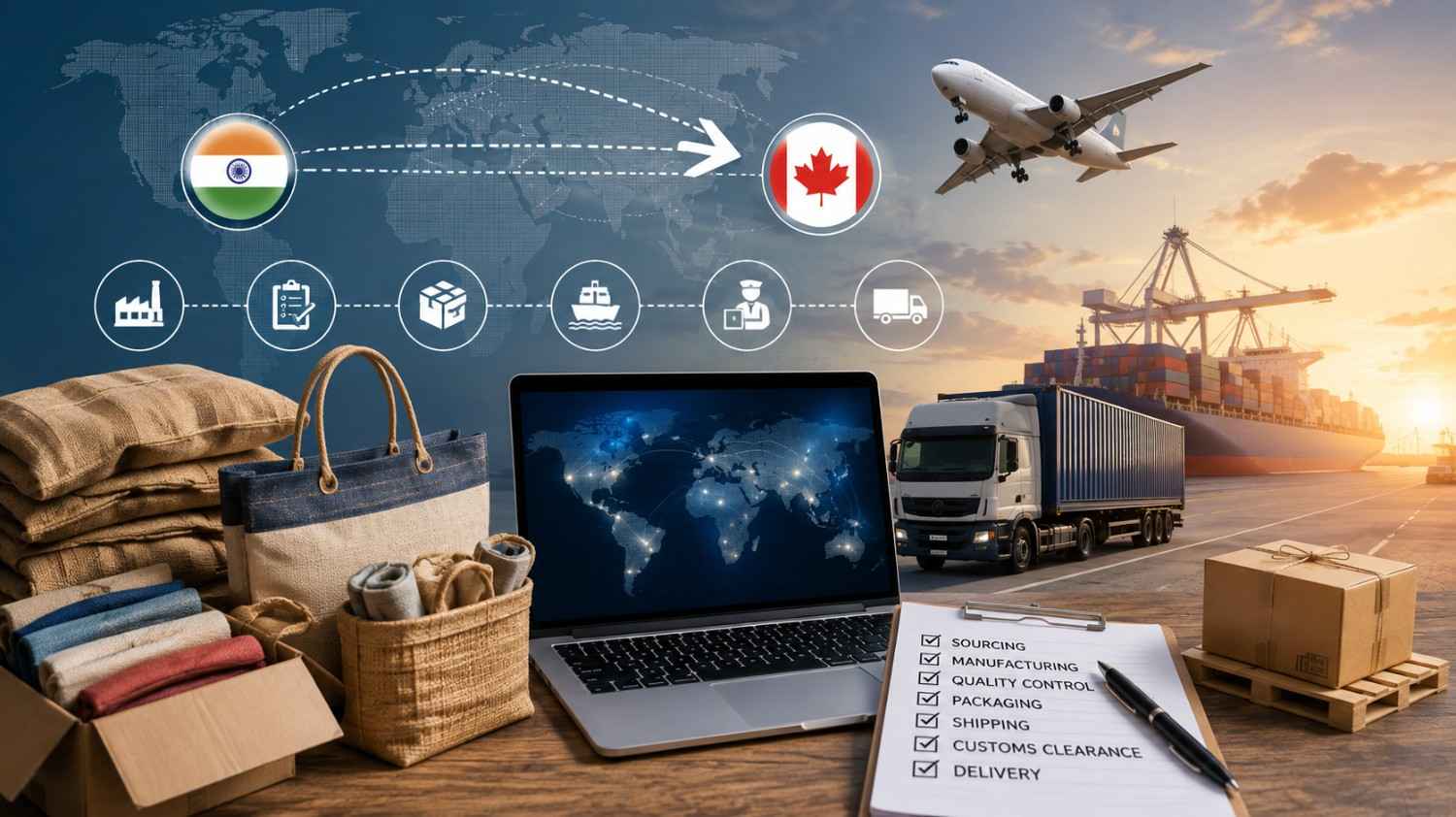
Sourcing wholesale goods from India can give Canadian businesses access to a broad manufacturing ecosystem covering textiles, apparel, home products, handicrafts, packaging, specialty products and many other categories. However, successful sourcing is about much more than finding a supplier with an attractive price.
A reliable India-to-Canada supply chain requires careful supplier evaluation, product specifications, quality control, transportation planning, documentation, landed-cost calculations and inventory management. Canadian businesses that approach sourcing strategically can build stronger supplier relationships while reducing avoidable delays and unexpected expenses.
For entrepreneurs in India, establishing a Canadian business presence can also create opportunities to connect Indian suppliers with Canadian retailers and commercial customers. Complete Consulting Canada highlights import, distribution and sourcing as potential business models for entrepreneurs who already understand Indian supplier networks and want to serve Canadian companies.
Understanding the India-to-Canada Sourcing Process
The sourcing process generally begins with identifying the right product and defining the Canadian market opportunity. Before approaching manufacturers, a buyer should understand the target customer, expected selling price, product specifications and estimated demand.
Supplier research can then focus on manufacturers and exporters with relevant production capabilities. Rather than choosing solely on quoted price, Canadian buyers should evaluate production experience, communication, quality consistency, capacity, packaging capabilities and export experience.
A detailed product specification is particularly important when sourcing internationally. Measurements, materials, colours, finishes, packaging, labelling and acceptable quality standards should be documented before production begins.
Finding Reliable Indian Suppliers
India has established manufacturing clusters across many industries. Depending on the product category, businesses can research manufacturers, exporters, trade directories, industry associations and established supplier networks.
A supplier’s ability to communicate clearly and consistently is important. Canadian buyers should ask for company information, product specifications, samples and relevant business documentation before committing to a commercial relationship.
Product samples can provide an early indication of manufacturing quality, but buyers should also consider whether the supplier can reproduce the same quality consistently during larger production runs.
Product Quality and Pre-Shipment Inspection
Quality control should be built into the sourcing process rather than treated as an afterthought.
Before production, the buyer and supplier should agree on specifications and quality expectations. During production, appropriate checks can help identify issues before goods are packed and shipped. A final inspection can verify quantities, dimensions, appearance, packaging and other agreed requirements.
This approach is particularly useful when products are being shipped over a long distance. Discovering a significant quality issue after the shipment reaches Canada can create additional transportation, storage and replacement costs.
Calculating the True Landed Cost
The supplier’s quoted price is not the complete cost of importing goods into Canada. Canadian businesses should calculate the expected landed cost before deciding whether a product is commercially viable.
Landed cost can include the product purchase price, packaging, inland transportation in India, international freight, insurance where applicable, customs-related charges, applicable duties and taxes, Canadian transportation, warehousing and other logistics expenses.
A product that appears inexpensive at the factory level may become considerably more expensive after transportation and other costs are included. Accurate landed-cost calculations therefore help businesses establish realistic pricing and profit expectations.
Choosing the Right Shipping Method
The appropriate transportation method depends on product type, shipment size, urgency and budget.
Ocean freight is commonly considered for larger shipments where transit time can be planned in advance. Air freight can be useful when speed is more important or when products are smaller and higher-value. Express transportation may be suitable for samples or urgent commercial requirements.
Canada’s logistics infrastructure provides connections through major ports, airports, railways and highways. Complete Consulting Canada’s supply-chain insights highlight Vancouver, Montreal, Halifax and other transportation gateways as important parts of Canada’s international logistics network.
Customs Documentation and Import Planning
International sourcing requires careful attention to documentation. Commercial invoices, packing information, transportation documents and product-related information should be prepared accurately for the shipment.
Product classification is also important because applicable duties and other requirements can depend on the nature and classification of the goods.
Canadian businesses should determine their import responsibilities before placing an order and work with appropriate customs and trade professionals when specialized assistance is required. Proper preparation can help reduce unnecessary delays and documentation problems.
Inventory and Warehousing in Canada
Once goods arrive in Canada, businesses need a practical inventory strategy. Warehousing location can affect delivery times and transportation costs, particularly for companies selling through eCommerce channels.
A business should estimate how much inventory it needs based on sales forecasts, supplier lead times, shipping schedules and seasonal demand. Holding too much inventory can tie up capital, while insufficient inventory can lead to missed sales opportunities.
Businesses selling online should also consider how imported products will move from the warehouse to Canadian customers. Inventory management, order processing and fulfillment should be considered before selecting a supplier and shipping model.
Building a Reliable Supplier Relationship
Successful wholesale sourcing is often based on long-term supplier relationships rather than one-time transactions.
Clear communication about product specifications, timelines, packaging and quality expectations can help both parties understand their responsibilities. Businesses should also maintain written records of agreed product requirements and commercial terms.
As the relationship develops, buyers can evaluate supplier performance based on quality consistency, communication, delivery reliability and responsiveness.
Sourcing Products That Fit the Canadian Market
Not every product manufactured successfully in India will automatically perform well in Canada. Canadian businesses should research customer preferences, competition, pricing and product positioning before importing inventory.
For entrepreneurs operating from India, this can create an opportunity to build a business around specialized sourcing and distribution. Complete Consulting Canada notes that entrepreneurs with strong supplier relationships in India can explore sourcing businesses that connect Indian manufacturers with Canadian retailers or commercial customers.
The strongest sourcing strategy connects a reliable supplier with a clearly defined Canadian market opportunity.
How Complete Consulting Canada Supports Business Expansion
Complete Consulting Canada helps entrepreneurs and businesses establish and grow their operations in Canada, including support related to business setup, market entry, eCommerce and logistics and supply-chain activities. Its website highlights logistics and supply-chain businesses among the industries it serves, as well as eCommerce marketplace setup for platforms serving Canadian customers.
For businesses planning to source wholesale goods from India and build a Canadian operation, Complete Consulting Canada can help create a broader Canadian business strategy around market entry, business setup and operational planning.
A successful India-to-Canada sourcing operation ultimately depends on preparation. By carefully evaluating suppliers, defining product specifications, controlling quality, calculating landed costs, planning transportation and understanding Canadian market requirements, businesses can create a more reliable supply chain and build a stronger foundation for long-term growth.
Frequently Asked Questions
Businesses can source many categories from India, including textiles, apparel, home products, handicrafts, packaging and specialty consumer goods. The right product depends on Canadian customer demand, competition, pricing and supplier capabilities.
Businesses can research manufacturers, exporters, industry networks and established supplier directories. Supplier experience, communication, production capabilities, samples and quality consistency should be evaluated before placing an order.
Buyers should review product specifications, supplier credentials, samples, quality expectations, landed costs, transportation arrangements, documentation and applicable Canadian import requirements before ordering.
Landed cost should account for the product price, packaging, transportation in India, international freight, insurance where applicable, applicable duties and taxes, Canadian transportation, warehousing and other associated expenses.
The appropriate option depends on shipment size, product characteristics, urgency and budget. Ocean freight can suit larger planned shipments, while air transportation can be useful when faster delivery is important.
Yes. Entrepreneurs with established Indian supplier relationships can develop sourcing or distribution businesses that connect Indian manufacturers with Canadian retailers and commercial buyers.
Complete Consulting Canada supports entrepreneurs and businesses with Canadian business setup, market-entry planning, eCommerce and operational services. Its services are designed to help international entrepreneurs establish and grow Canadian operations.