

Recent Posts
- Company Setup in Canada for Non-Residents: A Complete Guide
- Doing Business in Canada: A South African Executive’s Guide
- How to Start a Business in Canada: A Complete Guide
- Business Banking in Canada for South African Company Owners
- Business Services in Canada: A Complete Guide for Entrepreneurs
- Opening a Corporation in Canada as a South African Citizen
Business Registration in Canada: Complete Process for Indian Residents
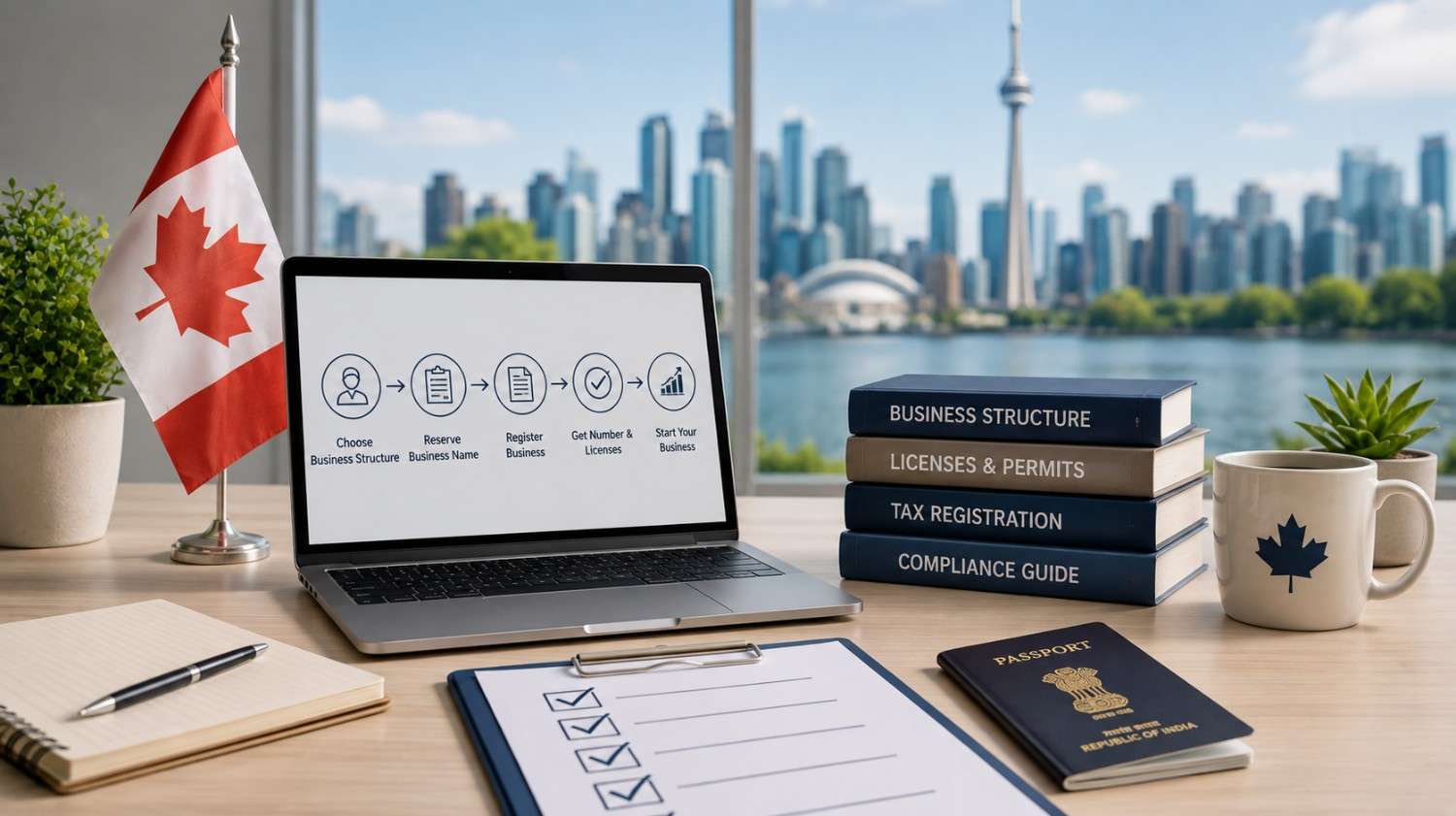
Canada continues to attract entrepreneurs from India who want to establish a company, reach North American customers, and build an international business presence. For an Indian resident, business registration in Canada involves several important decisions, including choosing the right business structure, selecting a province, preparing company information, arranging a Canadian registered office, and completing the required tax registrations.
The process can be completed remotely in many situations, making Canadian company registration for Indian residents an attractive option for entrepreneurs who want to explore the Canadian market without immediately travelling to Canada.
Why Are Indian Entrepreneurs Registering Businesses in Canada?
Canada provides access to a large North American marketplace and can give international entrepreneurs a structured base for serving Canadian and US customers. A Canadian company can also support e-commerce operations, consulting businesses, technology companies, professional services, trading businesses, and other commercial activities.
For Indian founders, establishing a Canadian company can also make it easier to present a North American business identity when working with customers, suppliers, marketplaces, and commercial partners.
The most suitable setup depends on your business activity, ownership structure, target customers, province, and long-term plans. This is why understanding the registration process before submitting an application is important.
Step 1: Decide on the Business Structure
The first stage is determining which type of business structure fits your objectives. Entrepreneurs may consider a corporation, sole proprietorship, or partnership depending on their circumstances.
For many international founders planning to build a long-term Canadian operation, incorporation is an important option to evaluate. A corporation can provide a separate business entity, structured ownership, and a framework for expanding operations.
The choice between federal and provincial incorporation should also be considered carefully. The appropriate option depends on where the business will operate, its expansion plans, name requirements, and ownership structure. Canada provides both federal and provincial or territorial incorporation routes.
Step 2: Select and Check Your Business Name
Once the structure is determined, the next stage is selecting a suitable company name. The proposed name should be distinctive and appropriate for the business.
Depending on the incorporation route and name type, a name search may be required before the incorporation documents are prepared. Entrepreneurs should also consider whether the desired name works well for their website, branding, social media presence, and future marketing activities.
Indian founders planning to serve customers in both Canada and the USA should think about their international brand positioning at this stage rather than choosing a name that limits future expansion.
Step 3: Choose the Canadian Province
The province where the company is established can affect the registration process and ongoing administration.
Ontario, British Columbia, Alberta, and other Canadian jurisdictions have their own registration processes and requirements. A business planning to operate in multiple provinces may also need additional registrations outside its original jurisdiction.
For Indian entrepreneurs, selecting a province should therefore be based on the company’s actual business plans rather than simply choosing a location because it is popular.
Step 4: Prepare Company Information
The registration process requires accurate company information. This can include the proposed business name, registered office information, ownership details, director information, business activities, and incorporation documents.
Non-resident entrepreneurs should prepare their identification and business documentation carefully before starting the process. Having accurate information available can make the registration workflow more efficient and reduce unnecessary delays.
The exact requirements can vary according to the structure and jurisdiction selected.
Step 5: Complete Incorporation and Obtain a Business Number
After the incorporation application is completed, the company receives its corporate documentation and can proceed with its business registrations.
A Canadian Business Number (BN) is a unique nine-digit identifier used for interacting with Canadian tax and business administration systems. Additional program accounts can be connected to the BN depending on the company’s requirements.
For non-residents, the Canada Revenue Agency provides a dedicated registration process for businesses operating in Canada when the business or owner does not meet the resident registration criteria. This process can be used for obtaining a BN and certain tax program accounts.
Step 6: Set Up Required Tax Accounts
After establishing the company, entrepreneurs should determine which tax accounts apply to their business activities.
Depending on the business model, registrations can include GST/HST, corporate income tax, payroll, and other applicable accounts. The requirements depend on factors such as revenue, business activities, employees, and where the company operates.
For non-resident entrepreneurs, understanding these requirements before beginning commercial operations is particularly important because Canadian and Indian business activities may create additional reporting considerations.
Step 7: Arrange a Canadian Business Address and Banking
A Canadian company needs appropriate registered office arrangements based on its incorporation structure. International founders who do not live in Canada may therefore need a suitable Canadian business address and mail-handling arrangement.
Opening a Canadian business bank account is another important stage. Financial institutions generally conduct identity and business verification before approving an account. Documentation requirements can differ between institutions, particularly for non-resident shareholders and directors.
Complete Consulting Canada provides business setup support for non-resident entrepreneurs, including company incorporation, CRA registration, business banking assistance, virtual office services, and ongoing administrative support.
Can Indian Residents Register a Canadian Company Remotely?
In many cases, yes. Non-resident entrepreneurs can establish Canadian companies without being physically present in Canada, although the exact process depends on the chosen structure, province, ownership details, and documentation.
Complete Consulting Canada’s services are specifically designed to help international entrepreneurs manage Canadian company setup remotely, from initial planning through registration and operational preparation.
For an Indian entrepreneur, remote setup can be particularly useful when the immediate goal is to establish a Canadian business presence while continuing to manage operations from India.
Why Professional Support Can Make the Process Easier
Canadian business registration involves more than completing a single form. Choosing the appropriate structure, province, company name, tax accounts, address arrangements, banking setup, and ongoing administrative requirements can become complicated for an entrepreneur based outside Canada.
Professional support can bring these stages together into a coordinated process. Instead of managing incorporation, tax registration, banking, and operational setup separately, Indian founders can work with one team that understands the requirements of international entrepreneurs.
Complete Consulting Canada helps Indian and other international entrepreneurs establish and develop businesses in Canada. Its services cover company incorporation, CRA registration, business banking support, virtual office solutions, e-commerce marketplace setup, digital marketing, bookkeeping, and ongoing administrative assistance.
For Indian entrepreneurs targeting Canada and the USA, the right Canadian business setup can provide a foundation for entering the North American market while maintaining operations and connections in India.
Frequently Asked Questions
Yes, non-resident entrepreneurs can establish Canadian businesses, subject to the requirements applicable to their selected structure and jurisdiction. The registration process can often be managed remotely.
Not necessarily. Many company setup activities can be completed remotely, although banking and identity verification requirements can vary by financial institution.
Requirements depend on the structure and province, but entrepreneurs generally need identification, company information, ownership details, director information, a proposed business name, and registered office information.
A Business Number, commonly called a BN, is a unique nine-digit identifier assigned to a business for interactions with Canadian tax and business administration systems.
Yes, non-resident entrepreneurs can apply for Canadian business banking, although each financial institution determines its own documentation, verification, and account-opening requirements.
Not every company requires the same tax accounts. Whether GST/HST registration applies depends on factors such as business activities, revenue, and the applicable registration rules.
Complete Consulting Canada supports international founders with company incorporation, tax registration, business banking assistance, virtual office arrangements, e-commerce setup, digital marketing, bookkeeping, and ongoing business administration.