
Can I Run a Canadian Company from India?

Can I Run a Canadian Company from India?

In today’s digital business world, you no longer need to live in the same country where your company operates. Many entrepreneurs in India are now exploring opportunities to start and manage businesses in Canada because of its strong economy, global reputation, and business-friendly environment. The good news is that, in many cases, you can legally run a Canadian company while living in India.


Whether you are planning to offer consulting services, launch an e-commerce brand, expand your startup, or enter the North American market, Canada provides excellent opportunities for international entrepreneurs. With the right business structure, legal setup, and compliance support, managing a Canadian company remotely from India is completely possible.


Why Entrepreneurs in India Choose Canada

Canada has become one of the most attractive destinations for global business owners because of its stable economy, transparent regulations, and international credibility. Having a Canadian company can help businesses build trust with global clients, access international banking opportunities, and expand into North American markets more easily.


Many Indian entrepreneurs also choose Canada because it offers a professional corporate structure that is recognized worldwide. A Canadian business presence can improve brand image and help attract international customers, partners, and investors.


Can a Non-Resident Own a Canadian Company?

Yes, non-residents can own and operate Canadian companies. However, the rules may vary depending on the province where the company is incorporated and the type of business structure selected.


Some provinces have residency requirements for directors, while others allow 100% foreign ownership with no requirement for a Canadian resident director. This flexibility makes Canada an attractive option for entrepreneurs living outside the country.


Federal incorporation is also available and provides business name protection across Canada, which can be beneficial for companies planning long-term growth.


Managing the Business from India

Running a Canadian company from India is now easier than ever because most business operations can be handled digitally. Entrepreneurs can manage meetings, marketing, accounting, customer support, and operations remotely using online tools and communication platforms.


Business owners typically work with Canadian accountants, consultants, or legal professionals to ensure compliance with tax regulations and corporate filing requirements. Having local professional support helps businesses operate smoothly even when the owner is based in another country.


Depending on the business type, you may also need:

• A Canadian business address

• Corporate bank account

• GST/HST registration

• Accounting and tax filing support

• Virtual office or mail handling services


Proper planning ensures the business remains legally compliant while operating internationally.


Tax and Banking Considerations

If you are running a Canadian company from India, understanding taxation and banking requirements is extremely important. A Canadian corporation must comply with Canadian corporate tax regulations, annual filings, and bookkeeping requirements.


Opening a Canadian business bank account may require additional documentation for non-residents, depending on the bank and province. Some entrepreneurs visit Canada during the setup process, while others work with financial institutions that support remote onboarding.


Since international tax situations can become complex, professional guidance is highly recommended to avoid compliance issues in both Canada and India.


Benefits of Running a Canadian Company from India


Operating a Canadian company while living in India offers several advantages. It allows entrepreneurs to build an international business presence without relocating immediately. Businesses can access global clients while benefiting from Canada’s trusted corporate environment.


A Canadian company can also create opportunities for international partnerships, easier access to North American customers, and improved business credibility. For startups and service providers, this setup can support long-term global expansion.


Many entrepreneurs also view Canadian incorporation as part of a future business or  strategy, especially if they plan to expand operations internationally over time.


Challenges to Consider

Although running a Canadian company remotely is possible, there can be challenges related to time zones, banking procedures, legal compliance, and taxation. Business owners must ensure they maintain accurate records and meet annual filing obligations.


Choosing the right province for incorporation and understanding cross-border tax implications are also important decisions that require careful planning.

Working with experienced incorporation and consulting professionals can help reduce risks and simplify the entire process.


Conclusion

Yes, you can run a Canadian company from India, and many entrepreneurs are already doing it successfully. Canada’s flexible business environment, international reputation, and digital-friendly systems make it possible to manage operations remotely while building a strong global presence.


With proper incorporation, legal compliance, and professional support, Indian entrepreneurs can successfully establish and operate businesses in Canada without relocating immediately. Whether your goal is global expansion, international credibility, or long-term business growth, Canada can provide an excellent platform for success.


Complete Consulting Canada — Helping You Build and Manage Your Canadian Business from Anywhere.

Frequently Asked Questions

Yes, Indian citizens can legally incorporate and own businesses in Canada, depending on provincial regulations and business structure requirements.

No, many entrepreneurs manage Canadian businesses remotely from India using online tools and professional support services.

Several provinces allow non-residents to incorporate businesses without requiring a Canadian resident director.

Some banks may allow remote processes, while others may require an in-person visit. Requirements vary depending on the bank and business structure.

Yes, Canadian corporations must comply with Canadian tax laws, annual filings, and accounting requirements.

Yes, working with experienced consultants or legal professionals can help ensure proper setup, compliance, and smooth business operations.

Benefits of Incorporating in Canada

Benefits of Incorporating in Canada

Starting a business in Canada can be an exciting and rewarding journey, but choosing the right business structure is essential for long-term success. Many entrepreneurs begin as sole proprietors because the process is simple and affordable. However, as the business grows, incorporation often becomes a smarter option. Incorporating a business in Canada provides several legal, financial, and operational advantages that can help businesses grow with greater stability and confidence.


Canada is recognized globally as one of the most business-friendly countries due to its strong economy, transparent legal system, and supportive environment for entrepreneurs. Whether you are launching a startup, opening a consulting company, or planning to expand internationally, incorporation can create a solid foundation for future growth.


Limited Liability Protection

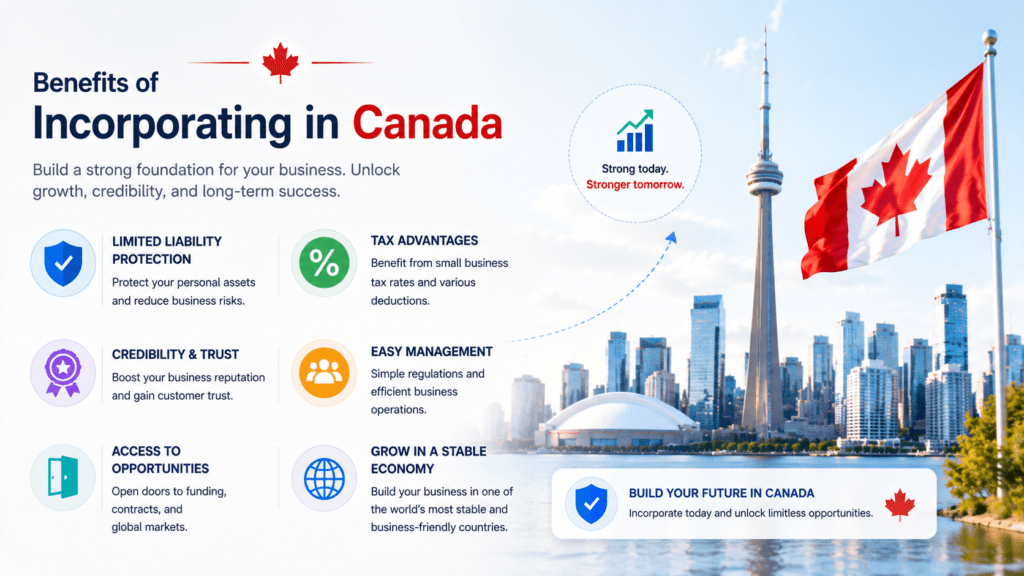
One of the biggest benefits of incorporating in Canada is limited liability protection. When a business becomes incorporated, it is treated as a separate legal entity from its owner. This means the corporation is responsible for its own debts and legal obligations.


For business owners, this separation helps protect personal assets such as savings, property, and investments if the company faces lawsuits or financial difficulties. In a sole proprietorship, the owner can be personally responsible for business liabilities, which increases financial risk.


This protection is especially valuable for businesses operating in industries such as consulting, technology, construction, and international trade, where legal or financial risks may arise during operations.


Tax Benefits and Financial Flexibility

Another major advantage of incorporation in Canada is the potential for tax savings. Corporate tax rates are generally lower than personal income tax rates, allowing incorporated businesses to retain more profits for growth and expansion.


Incorporation also provides flexibility in managing income. Business owners can choose to receive earnings through salary, dividends, or a combination of both, depending on what works best for their financial goals. This flexibility can improve cash flow management and support long-term tax planning.


Increased Professional Credibility

Incorporating a business can significantly improve its professional image. Customers, suppliers, investors, and financial institutions often view incorporated companies as more stable and trustworthy compared to sole proprietorships.


Using terms such as “Inc.”, “Ltd.”, or “Corp.” after a company name creates a stronger sense of professionalism and commitment. This can help businesses build better relationships with clients and improve opportunities for partnerships and contracts.


For companies planning to work with larger organizations or  clients, incorporation may also improve credibility and business opportunities.


Easier Access to Funding

As businesses grow, access to funding becomes increasingly important. Incorporated businesses often have a better chance of securing loans, attracting investors, and raising capital.


A corporation can issue shares to investors, making it easier to bring in external funding for expansion and operations. Financial institutions also tend to view incorporated companies as more organized and financially reliable, which may improve approval chances for business financing.


For startups and expanding businesses, incorporation creates a stronger structure for attracting investors and supporting future growth.


Business Continuity and Long-Term Stability

Unlike sole proprietorships, incorporated businesses continue to exist even if ownership changes. A corporation has perpetual existence, meaning the business can continue operating regardless of changes in shareholders or management.


This creates long-term stability and makes it easier to transfer ownership, add business partners, or plan future succession. If the founder retires or decides to sell the company, the corporation can continue operating without major disruption.


This advantage is particularly important for entrepreneurs who want to build businesses with long-term value and future expansion plans.


Better Opportunities for Growth

Canada’s corporate structure is respected internationally, which can benefit businesses planning to expand into global markets. Incorporation helps create a more organized structure for scaling operations, hiring employees, and managing larger business activities.


Federal incorporation can also provide name protection across Canada, helping businesses strengthen their brand identity while expanding into different provinces.


As companies grow, incorporation offers greater flexibility for restructuring ownership, bringing in investors, and managing future expansion opportunities more efficiently.


Strong Canadian Business Environment

Canada offers a stable economy, transparent regulations, and strong legal protections for businesses. Entrepreneurs benefit from reliable banking systems, skilled workers, and access to international markets, making Canada an attractive place for business growth.


The country also supports innovation and entrepreneurship through various business programs and trade opportunities, helping businesses compete both locally and globally.


Conclusion

Incorporating in Canada offers several important advantages for businesses looking to grow professionally and securely. From limited liability protection and tax benefits to improved credibility and easier access to funding, incorporation provides a strong foundation for long-term success.


Although incorporation comes with additional legal and accounting responsibilities, the long-term benefits often outweigh the costs for growing businesses. For entrepreneurs planning expansion, investment opportunities, or long-term stability, incorporation can be a smart business decision.


If you are considering incorporating your business in Canada, seeking professional guidance can help ensure the process is smooth, compliant, and aligned with your business goals.


Complete Consulting Canada — Helping You Build and Manage Your Canadian Business from Anywhere.

Frequently Asked Questions

Incorporating a business means creating a separate legal entity from the business owner. The corporation can own assets, enter contracts, and be responsible for its own debts and liabilities.

Some of the biggest benefits include limited liability protection, lower corporate tax rates, improved credibility, easier access to funding, and better opportunities for long-term business growth.

It depends on the size and goals of the business. Sole proprietorships are easier to set up, but incorporation provides stronger legal protection and tax advantages for growing businesses.

Yes, non-residents can incorporate a business in Canada, although requirements may vary depending on the province and business structure.

The cost depends on whether the business is incorporated federally or provincially and whether professional legal or consulting services are used during the process.

In many cases, yes. Corporate tax rates are generally lower than personal income tax rates, and eligible businesses may qualify for the Small Business Deduction.

Yes, incorporated businesses must file annual returns, maintain corporate records, and comply with Canadian tax and legal requirements.

Yes. One of the key advantages of incorporation is business continuity. The corporation continues to exist even if ownership or management changes.

Do You Need PR to Start a Business in Canada?

Do You Need PR to Start a Business in Canada?

A Complete Guide for Foreign Entrepreneurs & Investors

Canada is one of the world’s most attractive destinations for entrepreneurs because of its stable economy, business-friendly environment, and access to international markets. Many foreign entrepreneurs interested in expanding to Canada often ask an important question:


“Do you need permanent residency (PR) to start a business in Canada?”

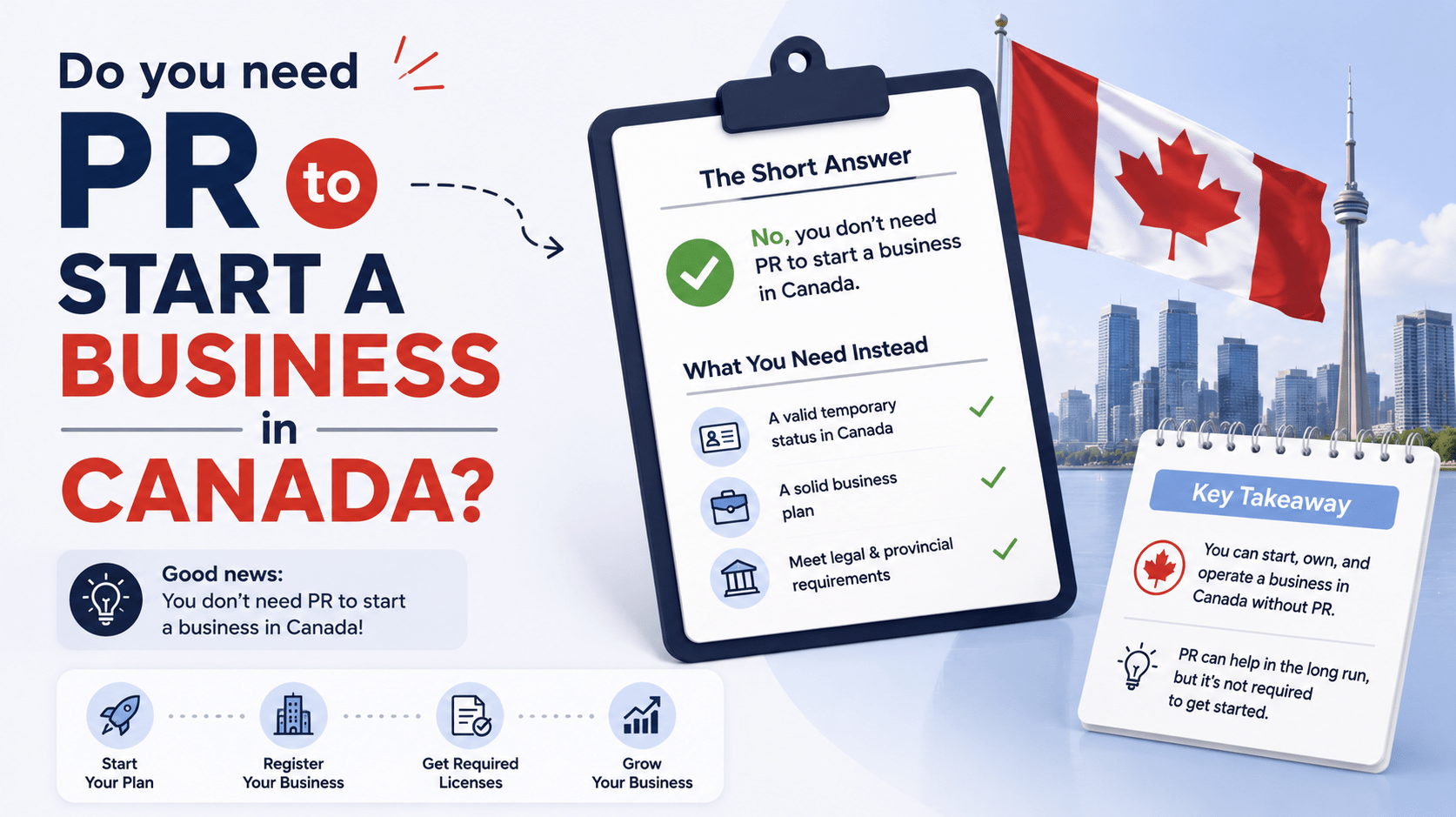
The simple answer is no — you do not need permanent residency to legally start or own a business in Canada.


Foreign entrepreneurs, investors, and non-residents can establish businesses in Canada even without PR status. However, the process, business structure, and operational requirements may vary depending on your goals and the province where the business is being established.


This guide explains how non-residents can start businesses in Canada, what limitations may apply, and what entrepreneurs should consider before launching operations.


Can a Non-Resident Own a Business in Canada?

Yes, non-residents can legally own businesses in Canada.


Canada allows foreign ownership of corporations in many provinces and industries. This means international entrepreneurs can:

• Incorporate a Canadian company

• Own shares in a corporation

• Operate online businesses

• Open branch offices

• Invest in Canadian businesses

Many foreign entrepreneurs establish businesses in Canada for:

• International expansion

• Access to North American markets

• E-commerce growth

• Technology startups

• Import/export opportunities


Difference Between Owning a Business & Living in Canada

One of the biggest misunderstandings is assuming business ownership automatically provides  status.

Starting a business in Canada does not automatically grant:

• Permanent residency (PR)

• Canadian citizenship

• Work authorization


You can legally own a Canadian company without PR, but if you plan to actively work and live in Canada, you may require:

• A work permit

• Business pathway

• Appropriate visa or authorization

Business ownership and  status are two separate processes.


How Foreign Entrepreneurs Can Start a Business in Canada

Non-residents can usually start businesses through:

• Federal incorporation

• Provincial incorporation

• Partnerships

• Subsidiaries

• Branch offices

The right structure depends on:

• Business goals

• Ownership structure

• Tax planning

• Expansion strategy

Many foreign entrepreneurs choose federal incorporation because it provides broader name protection and national business recognition.


Do All Provinces Allow 100% Foreign Ownership?

Many Canadian provinces allow full foreign ownership, but regulations may vary.

Some provinces previously required a percentage of Canadian resident directors, although rules have changed in many regions over time.

Requirements may depend on:

• Province of incorporation

• Industry type

• Business structure

Because regulations can change, entrepreneurs should verify current provincial requirements before incorporating.


Can You Open a Business Bank Account Without PR?

Yes, many Canadian banks allow non-residents to open business bank accounts.

However, banks may require:

• Incorporation documents

• Passport or identification

• Business information

• Proof of address

• In-person verification (in some cases)

Banking requirements vary depending on:

• The financial institution

• Residency status

• Business activity


Do You Need a Work Permit to Run the Business?

This depends on your level of involvement in Canada.

If you simply own the company remotely, a work permit may not be required.

However, if you plan to:

• Manage daily operations in Canada

• Hire employees locally

• Physically work within the business

you may need:

• A work permit

• Business visitor authorization

• Entrepreneur pathway

Programs such as:

• Intra-Company Transfer (ICT)

• Provincial Entrepreneur Programs

• Startup Visa pathways

may help eligible entrepreneurs operate businesses in Canada legally.


Benefits of Starting a Business in Canada Without PR

Many entrepreneurs establish Canadian businesses before applying for permanent residency because it offers several advantages.

Canada provides:

• Strong banking systems

• Global trade access

• Stable business environment

• Access to North American markets

• Opportunities for digital and e-commerce growth

For international entrepreneurs, Canada is often viewed as a strategic location for long-term expansion.


Common Challenges Non-Residents May Face

Although starting a business without PR is possible, entrepreneurs may face challenges such as:

• Banking verification requirements

• Tax compliance complexity

• limitations

• Business licensing requirements

Provincial regulations

Working with professional consultants can help simplify these processes and reduce delays.


How Complete Consulting Canada Helps Entrepreneurs

At Complete Consulting Canada, we help foreign entrepreneurs establish and grow businesses in Canada through:

• Federal & provincial incorporation

• Business structure guidance

• Virtual office setup

• CRA registrations

• Business banking support

• Website & digital marketing services

• Business expansion consulting

Our goal is to help entrepreneurs navigate the Canadian business environment with confidence.


Final Thoughts

You do not need permanent residency to start or own a business in Canada. Many non-resident entrepreneurs successfully launch companies in Canada every year for investment, expansion, e-commerce, and long-term growth opportunities.


However, business ownership does not automatically provide status or work authorization. Understanding the legal, operational differences is important before starting your business journey.


With proper planning and professional guidance, foreign entrepreneurs can successfully establish and grow businesses in Canada even without PR status.

Frequently Asked Questions

Yes, non-residents can legally own and operate businesses in Canada depending on the business structure and province.

No, starting a business does not automatically provide permanent residency or citizenship.

Yes, many entrepreneurs incorporate Canadian businesses remotely with professional assistance.

Not always. Many provinces allow full foreign ownership without requiring a Canadian partner.

Yes, many banks allow non-residents to open accounts, although requirements may vary.

If you plan to actively work or operate the business inside Canada, a work permit or appropriate authorization may be required.

Corporations are commonly used because they provide liability protection and operational flexibility.

How Long Does It Take to Register a Company in Canada?

How Long Does It Take to Register a Company in Canada?

Canada is one of the most attractive destinations for entrepreneurs, startups, ecommerce sellers, and international businesses looking to expand globally. With a stable economy, professional business environment, and growing digital market, many entrepreneurs choose Canada for company formation and long-term growth.


The answer depends on several factors, including:

• Business structure

• Province of registration

• Federal or provincial incorporation

• Documentation accuracy

• processing times


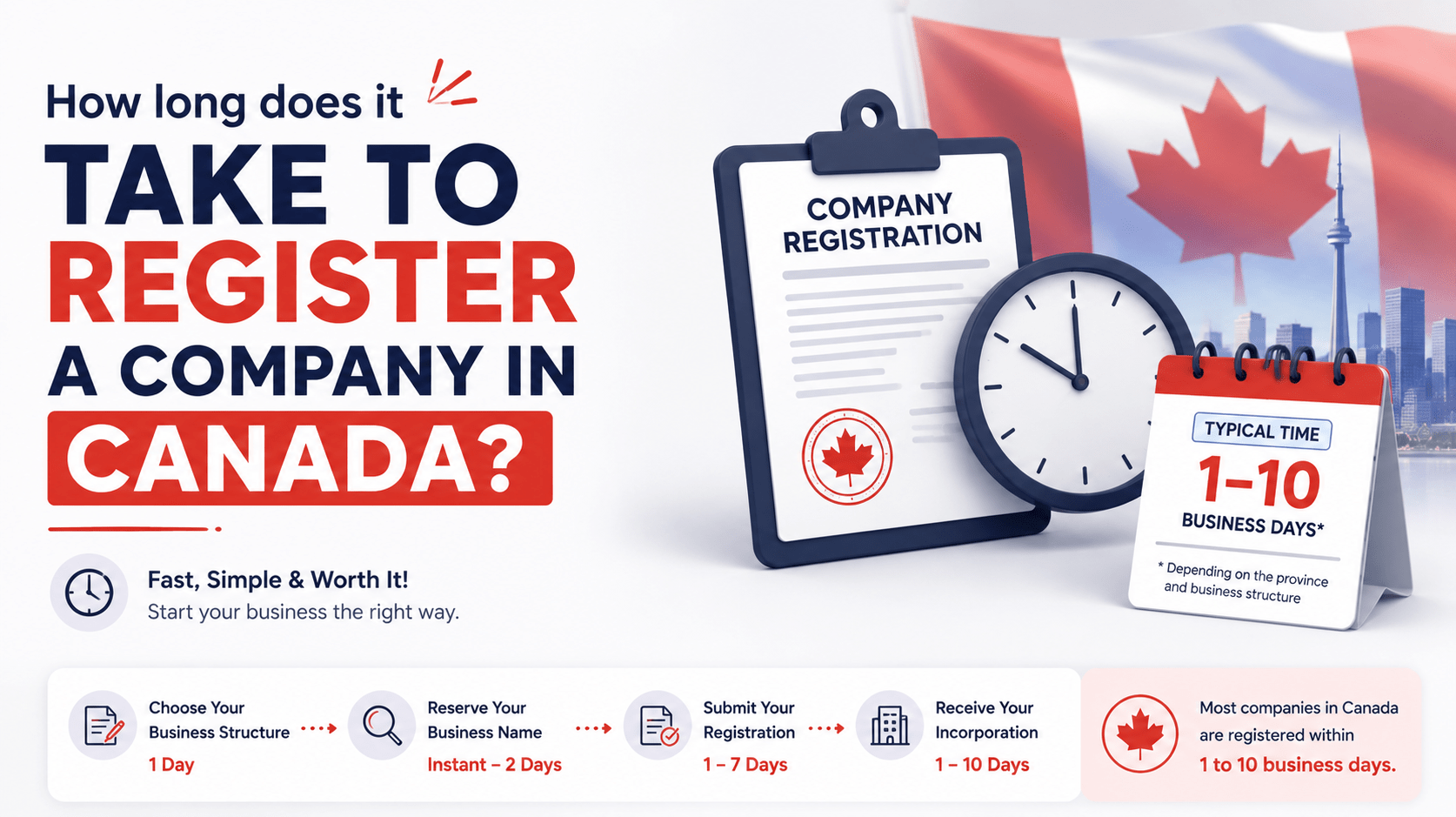
In many cases, company registration in Canada can be completed within a few days, while some registrations may take longer depending on the business setup and compliance requirements.


This guide explains the registration process, expected timelines, and factors that affect company registration speed in Canada.


Why Entrepreneurs Choose Canada for Business?

Canada offers several advantages for businesses, including:

• Stable economy

• Professional business environment

• Ecommerce growth opportunities

• International trade access

• Strong banking system

• Startup-friendly ecosystem

Businesses operating in Canada include:

• Ecommerce brands

• Consulting firms

• Technology startups

• Import-export companies

• Service businesses

• Wholesale operations


Business Structures in Canada

The registration timeline often depends on the business structure selected.

Sole Proprietorship- A sole proprietorship is one of the simplest and fastest business structures to register.

Common Features

• Lower setup costs

• Simple registration process

• Minimal compliance requirements

This structure is often used by freelancers and small service providers.

Partnership- A partnership involves two or more owners operating a business together.

Common Features

• Shared ownership

• Shared responsibilities

• Moderate registration requirements

Corporation- A corporation is a separate legal entity from its owners.

Common Features

• Limited liability protection

• Better business credibility

• Stronger expansion opportunities

• Additional compliance obligations

Many entrepreneurs prefer corporations for long-term growth and scalability.


Average Time to Register a Business in Canada

Registration timelines vary depending on the business type and registration method.


Sole Proprietorship Registration Timeline

A sole proprietorship can often be registered within:

• A few hours to several business days

This depends on the province and documentation process.

Partnership Registration Timeline

Partnership registration may take:

• A few business days

Additional documentation may affect timing.

Corporation Registration Timeline

Corporation registration timelines usually range from:

• 1 business day to several business days

The exact timeline depends on:

• Federal or provincial incorporation

• Name approval process

• Documentation accuracy

• processing speed


Federal vs Provincial Incorporation Timelines

Federal Incorporation- Federal incorporation allows businesses to operate across Canada under the same corporate name.

Timeline- Federal incorporation can often be completed quickly if documents are properly prepared.

However, additional provincial registrations may still be required for operations in specific provinces.

Provincial Incorporation- Provincial incorporation limits the business primarily to one province.

Timeline

Processing times vary between provinces such as:

• Ontario

• British Columbia

• Alberta

• Quebec

Some provinces may process registrations faster than others.


Factors That Affect Registration Speed

Business Name Approval

Business name approval can affect processing time.

If the proposed name conflicts with another business or trademark, registration may be delayed.

NUANS Name Search

Many corporations require a NUANS report to check business name availability.

Preparing and reviewing the report may add time to the process.

Documentation Accuracy

Incomplete or incorrect documents may delay registration approval.

Common required documents include:

• Director information

• Shareholder details

• Business address

• Incorporation forms

Province of Registration

Each province has different processing systems and timelines.

Some provinces offer faster online processing than others.


Workload

Processing times may increase during high application periods.


Online vs Manual Registration

Online applications are generally processed faster than paper-based submissions. Digital registration systems have improved processing efficiency in many provinces.


Documents Required for Company Registration

Common documents include:

• Identity proof

• Address proof

• Business name details

• Director information

• Shareholder information

• Articles of Incorporation

Having documents prepared in advance can speed up the registration process.


Business Number (BN) Registration

After registration, businesses may also need a Business Number (BN).

The BN is used for:

• Tax filing

• GST/HST registration

• Payroll setup

• communication

Additional registrations may affect overall setup timelines.


GST/HST Registration Timeline

Businesses selling taxable products or services may need GST/HST registration.

Processing timelines vary depending on:

• Business type

• Revenue expectations

• Registration method


Opening a Business Bank Account

After company registration, businesses often open a Canadian business bank account.

Banks may require:

• Incorporation documents

• Identity verification

• Business Number

• Address proof

Bank account approval timelines vary between financial institutions.


Ecommerce Businesses and Company Registration

Many ecommerce sellers register corporations in Canada for:

• Marketplace approvals

• Supplier relationships

• Professional credibility

• Tax compliance

• International expansion

Popular ecommerce platforms include:

• Shopify

• Amazon Canada

• Walmart Canada

• Etsy

Fast registration can help businesses start operations more efficiently.


Common Mistakes That Delay Company Registration

Choosing a Conflicting Business Name- Names too like existing businesses may be rejected.

Incorrect Documentation- Errors in forms or director information may delay processing.

Missing Information- Incomplete applications often require additional review.

Delayed Tax Registrations- Missing GST/HST or Business Number registrations may slow business setup.

Benefits of Professional Business Registration Support

Professional support can help businesses:

• Prepare documents correctly

• Avoid registration delays

• Choose the right business structure

• Understand compliance requirements

• Simplify the setup process

This can help businesses launch more efficiently.


How Complete Consulting Canada Can Help?

Complete Consulting Canada helps businesses with:

• Company registration

• Business incorporation

• Business setup guidance

• Compliance support

• Ecommerce business consulting

• Startup assistance

Professional guidance helps businesses streamline registration and avoid costly mistakes.


Final Thoughts

The time required to register a company in Canada depends on the business structure, province, documentation accuracy, and processing times.

Simple business structures such as sole proprietorships may be registered quickly, while corporations may require additional approvals and documentation.

Businesses that prepare documents properly and follow the correct registration process can often complete company setup efficiently and begin operations faster in the Canadian market.

Frequently Asked Questions

Registration timelines vary depending on the business structure and province, but many companies can be registered within a few business days.

Yes, online registration is generally faster than paper-based applications.

Processing times vary, but federal incorporation may involve additional provincial registration requirements.

Common documents include identity proof, business name details, director information, and incorporation forms.

Yes, many foreign entrepreneurs can register businesses in Canada depending on provincial rules and business structure requirements.

A NUANS report checks whether a proposed business name conflicts with existing corporations or trademarks.

Yes, delays may occur due to incorrect documentation, name conflicts, or processing workloads.