
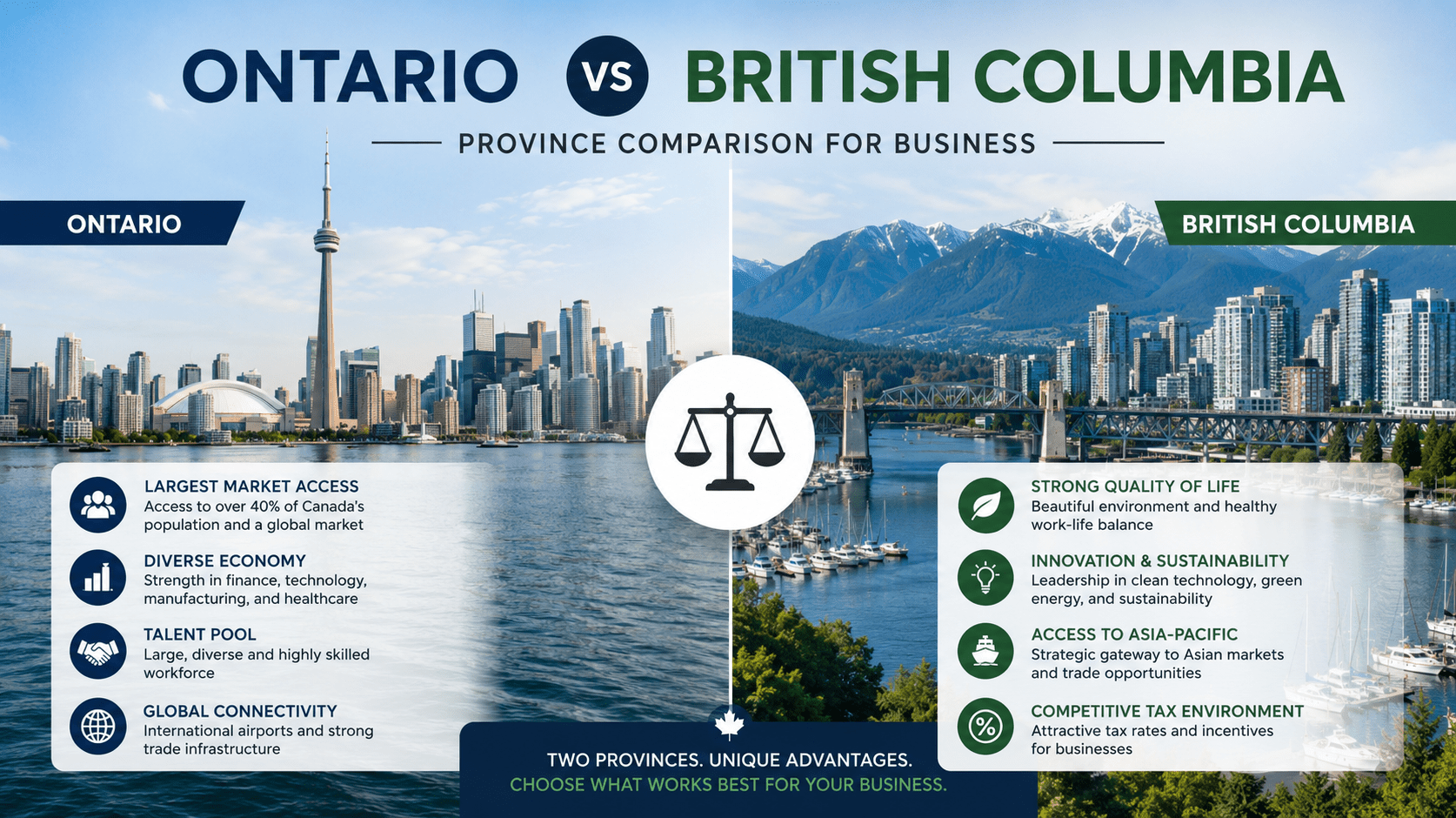
Province comparison: Ontario vs British Columbia for business

Province comparison: Ontario vs British Columbia for business

Canada is one of the most attractive destinations for entrepreneurs, startups, ecommerce sellers, and international businesses looking to expand globally. Among the most popular provinces for business setup are Ontario and British Columbia.


Both provinces offer strong economies, growing business ecosystems, international trade opportunities, and access to major consumer markets. However, they differ in areas such as operating costs, industry strengths, taxes, and business opportunities.

For entrepreneurs planning to register or expand a business in Canada, an important question often arises:


Should you choose Ontario or British Columbia for your business?

This guide compares Ontario and British Columbia from a business perspective to help entrepreneurs make informed decisions.


Why Ontario and British Columbia Are Popular for Businesses

Ontario and British Columbia are two of Canada’s largest and most economically active provinces.

Both provinces attract:

• Ecommerce businesses

• Technology startups

• Import-export companies

• Consulting firms

• Wholesale businesses

• Service-based companies

• International entrepreneurs

These provinces also provide access to strong infrastructure, skilled talent, and international markets.


Overview of Ontario for Business

Ontario is Canada’s largest business hub and one of the country’s most economically powerful provinces.

Major business city: Toronto

Ontario is known for:

• Large consumer market

• Financial and corporate sectors

• Ecommerce growth

• Technology ecosystem

• Manufacturing industries

• International trade opportunities

Many entrepreneurs choose Ontario because of its strong business infrastructure and market size.


Advantages of Starting a Business in Ontario

Large Customer Base- Ontario has one of the largest populations in Canada, creating strong opportunities for businesses targeting consumers and B2B clients.


Strong Ecommerce Market

Ontario is highly active in ecommerce and online retail.

Popular ecommerce sectors include:

• Fashion accessories

• Beauty products

• Home décor

• Sustainable products

• Lifestyle brands

Businesses selling online often benefit from Ontario’s large customer market.


Financial and Corporate Hub

Toronto is considered Canada’s financial center.

This provides advantages for businesses seeking:

• Banking access

• Investment opportunities

• Corporate networking

• Professional services


Skilled Workforce

Ontario has access to highly skilled professionals across industries such as:

• Technology

• Finance

• Marketing

• Ecommerce

• Logistics

• Consulting


Strong Startup Ecosystem

Ontario supports startups and innovation-driven businesses through incubators, accelerators, and business networks.


Challenges of Doing Business in Ontario

Higher Operating Costs

Business expenses in Ontario may be higher in areas such as:

• Commercial rent

• Salaries

• Marketing costs

• Warehousing


Competitive Market

Ontario’s business market is highly competitive due to the large number of businesses operating in the province.


Overview of British Columbia for Business

British Columbia is another major business destination in Canada.

Major business city: Vancouver

British Columbia is known for:

• International trade

• Technology startups

• Sustainable businesses

• Import-export operations

• Tourism-related industries

• Ecommerce and lifestyle brands

Its Pacific Coast location makes it attractive for businesses involved in international trade and logistics.


Advantages of Starting a Business in British Columbia

International Trade Opportunities

British Columbia has strong connections to global trade markets, especially across the Pacific region.

This benefits:

• Import-export businesses

• Wholesale businesses

• International brands

Growing Technology Sector

British Columbia has a strong technology and startup ecosystem.

Popular sectors include:

• Software development

• AI businesses

• SaaS companies

• Digital services


Strong Sustainability Market

Consumers in British Columbia often show strong interest in:

• Eco-friendly products

• Sustainable brands

• Handmade products

• Ethical businesses

This creates opportunities for environmentally conscious businesses.


Lifestyle and Creative Industries

British Columbia supports industries such as:

• Fashion

• Creative products

• Wellness brands

• Lifestyle businesses


Access to International Shipping

Vancouver’s location supports global shipping and international logistics operations.


Challenges of Doing Business in British Columbia

Higher Real Estate Costs- Commercial and residential costs in Vancouver can be expensive.

Smaller Population Compared to Ontario- British Columbia has a smaller consumer market than Ontario.

Businesses relying heavily on large local customer bases may prefer Ontario.


Ontario vs British Columbia: Key Business Comparison

Factor

Ontario

British Columbia

Largest Business City

Toronto

Vancouver

Population Size

Larger

Smaller

Ecommerce Opportunities

Very Strong

Strong

International Trade

Strong

Very Strong

Technology Sector

Strong

Strong

Startup Ecosystem

Excellent

Excellent

Import-Export Business

Strong

Excellent

Cost of Operations

Higher

High

Consumer Market

Very Large

Moderate

Sustainability Market

Growing

Very Strong


 Best Province for Ecommerce Businesses

Ontario

Ontario may be better for ecommerce businesses targeting:

• Large customer bases

• Fast domestic shipping

• High sales volume

• Broader market reach


British Columbia

British Columbia may suit ecommerce brands focused on:

Sustainable products

Lifestyle branding

International sourcing

Creative and niche products


Best Province for Technology Startups

Both provinces offer strong opportunities.


Ontario Technology Advantages

• Corporate networks

• Investment ecosystem

• Large business market


British Columbia Technology Advantages

• Innovation-focused culture

• Strong startup communities

• International technology connections


Best Province for Import-Export Businesses

British Columbia is often preferred for businesses involved in international trade because of its Pacific Coast access and shipping infrastructure.

However, Ontario also remains strong due to its manufacturing and distribution ecosystem.


Business Costs in Ontario vs British Columbia

Business costs vary depending on:

• Industry

• Business model

• Office location

• Staffing requirements

• Warehousing needs

Common business expenses include:

• Registration fees

• Office rent

• Marketing

• Payroll

• Inventory

• Logistics

Both provinces can have relatively high operating costs in major cities.


Business Structures Available in Both Provinces

Entrepreneurs can generally choose from:

Sole Proprietorship- Suitable for freelancers and small businesses.

Partnership- Suitable for businesses with multiple owners.

Corporation- One of the most popular options for growing businesses.

Benefits of Incorporation

• Limited liability protection

• Better credibility

• Easier expansion

• Professional business image

Many international businesses prefer corporations for long-term scalability.


Which Province Is Better for Foreign Entrepreneurs?

The ideal province depends on business goals.

Ontario May Be Better For

• Ecommerce businesses

• Large-scale operations

• Consulting firms

• Financial services

• Businesses targeting larger domestic markets

British Columbia May Be Better For

• Import-export companies

• Sustainable brands

• Technology startups

• Lifestyle and creative businesses

• International trade-focused companies


Important Factors to Consider Before Choosing a Province

Before selecting a province, businesses should evaluate:

• Target market

• Industry type

• Operational costs

• Logistics requirements

• Tax considerations

• Hiring needs

• Long-term growth plans

Choosing the right province can affect long-term business success.


How Complete Consulting Canada Can Help?

Complete Consulting Canada helps businesses with:

• Company registration

• Business incorporation

• Ecommerce business setup

• Business consulting

• Market expansion guidance

• Compliance support

• Startup consulting

Professional guidance can help businesses choose the right province and business structure based on their goals.


Final Thoughts

Ontario and British Columbia are both excellent provinces for starting and expanding businesses in Canada.

Ontario offers advantages through its large consumer market, financial ecosystem, and strong ecommerce opportunities, while British Columbia stands out for international trade, sustainability-focused markets, and technology innovation.

The best province depends on your business model, industry, target audience, and long-term expansion plans.

Businesses that carefully evaluate operational goals and market opportunities can build stronger long-term success in Canada.

Frequently Asked Questions

The best province depends on your business type, target market, operational needs, and long-term goals.

Yes, Ontario has a large consumer market and strong ecommerce opportunities.

Businesses often choose British Columbia for international trade, sustainability-focused markets, and technology opportunities.

Costs vary depending on industry and city, but both Ontario and British Columbia can have high operating costs in major business centers.

Yes, British Columbia is popular for import-export businesses because of its Pacific Coast location and shipping infrastructure.

Yes, many foreign entrepreneurs operate businesses in both provinces depending on regulations and business structures.

Both provinces have strong startup ecosystems, but the best option depends on the industry and business goals.
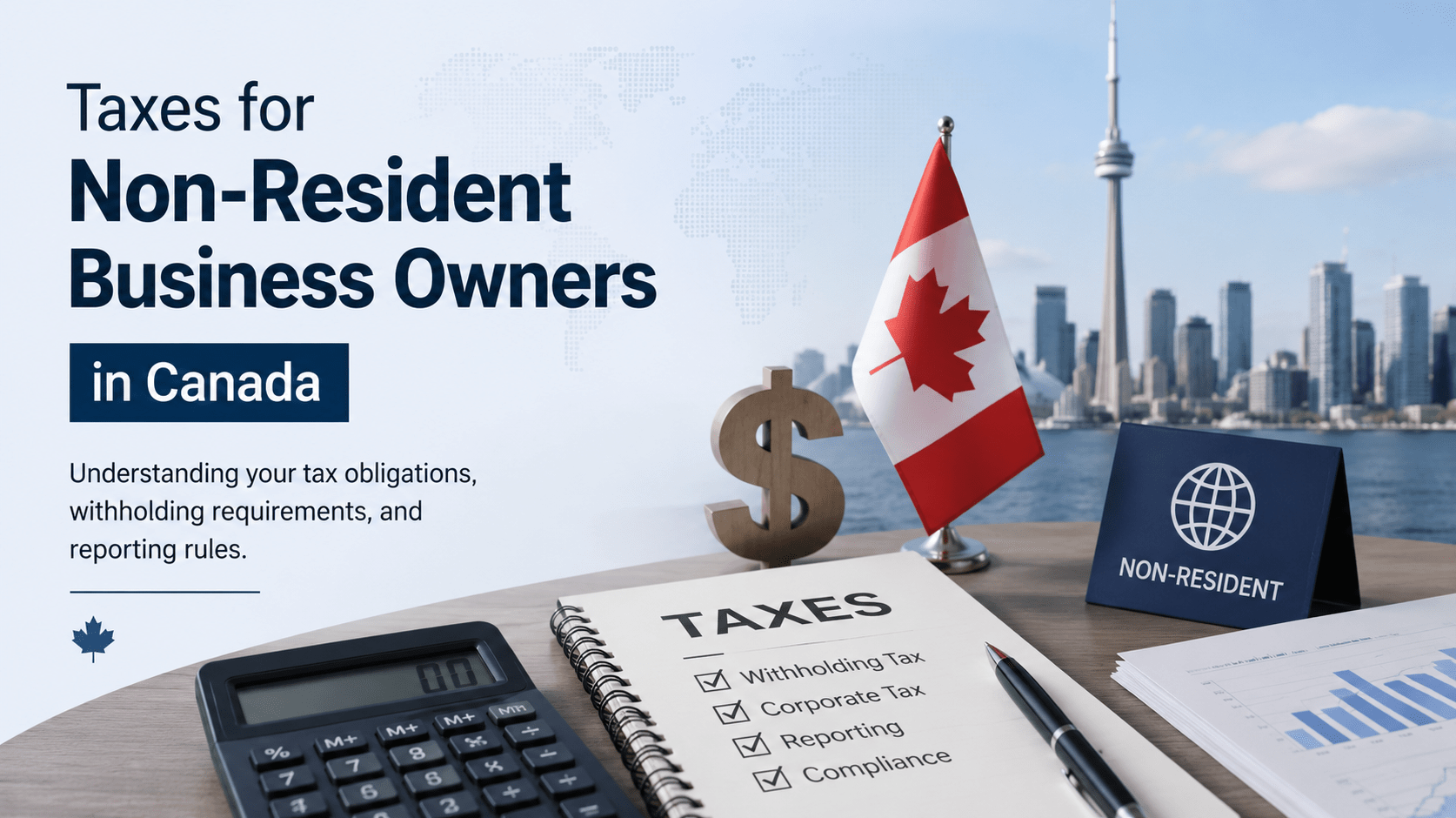
Taxes for Non-Resident Business Owners in Canada

Taxes for Non-Resident Business Owners in Canada

Canada is one of the most popular destinations for entrepreneurs and international businesses looking to expand globally. With a strong economy, growing ecommerce market, and business-friendly environment, many non-resident entrepreneurs choose to establish businesses in Canada.


However, understanding the Canadian tax system is extremely important before starting operations. Non-resident business owners may have different tax obligations depending on their business structure, revenue, province, and business activities.


This guide explains the key taxes, filing requirements, and compliance responsibilities for non-resident business owners in Canada.


Understanding Non-Resident Business Ownership in Canada

A non-resident business owner generally refers to an individual or entity operating a Canadian business while residing outside Canada.

Non-resident entrepreneurs commonly operate:

• Ecommerce businesses

• Consulting firms

• Import-export companies

• Technology startups

• Wholesale businesses

• Service-based businesses

Tax obligations depend on factors such as:

• Business structure

• Physical presence in Canada

• Revenue generation

• Province of operation

• Nature of business activities


Common Business Structures and Taxation

Sole Proprietorship

A sole proprietorship is owned and operated by one individual.

Tax Considerations

• Business income is generally linked to the owner personally

• Simpler reporting structure

• Lower administrative requirements

This structure is often used by freelancers and small service providers.

Partnership

A partnership involves two or more business owners.

Tax Considerations

• Income is usually shared between partners

• Partners report their portion of income separately

• Partnership agreements may affect tax allocation

Corporation

A corporation is a separate legal entity from its owners.

Tax Considerations

• Separate corporate tax returns are required

• Additional compliance obligations apply

• Corporate tax planning opportunities may be available

Many non-resident entrepreneurs prefer corporations because they offer limited liability protection and stronger business credibility.


Corporate Taxes in Canada

Corporations operating in Canada are generally required to pay corporate income taxes.

Corporate taxes may include:

• Federal corporate tax

• Provincial corporate tax

Tax rates vary depending on:

• Province

• Business activities

• Revenue levels

• Business classification


Federal Corporate Tax

The federal  applies taxes on taxable corporate income.

Certain businesses may qualify for deductions or incentives depending on their operations and eligibility.


Provincial Corporate Taxes

Each province may apply its own corporate tax rules and rates.

Popular business provinces include:

• Ontario

• British Columbia

• Alberta

• Quebec

Provincial tax obligations may vary significantly.


GST/HST Registration for Non-Resident Businesses

GST/HST is Canada’s sales tax system. Businesses selling taxable products or services may need GST/HST registration depending on their activities and revenue.


What Is GST?

GST stands for Goods and Services Tax.


What Is HST?

HST stands for Harmonized Sales Tax used in certain provinces.


When GST/HST Registration May Be Required

Businesses may need GST/HST registration if they:

• Sell taxable goods or services

• Exceed certain revenue thresholds

• Operate ecommerce businesses

• Import goods into Canada

Proper GST/HST compliance is important for avoiding penalties and future tax issues.


Ecommerce Business Taxes in Canada

Ecommerce businesses may have additional tax responsibilities depending on:

• Sales volume

• Marketplace operations

• Customer locations

• Product categories


Import and Export Tax Considerations

Businesses importing products into Canada may encounter:

• Customs duties

• Import taxes

• GST on imported goods

Tax obligations depend on:

• Product type

• Country of origin

• Applicable trade agreements

Import-export businesses should understand Canadian customs and tax regulations carefully.


Payroll Taxes and Employee Obligations

Businesses hiring employees in Canada may need payroll registration.


Payroll Responsibilities May Include

• Income tax deductions

• Payroll remittances

• Employment-related contributions

Employers must comply with Canadian payroll regulations and filing requirements.


Tax Filing Requirements for Corporations

Corporations generally need to file:

• Annual corporate tax returns

• Financial statements

• GST/HST returns (if registered)

• Payroll filings (if applicable)

Late filings may result in penalties and interest charges.


Permanent Establishment and Tax Residency

Tax obligations may depend on whether a business has a permanent establishment in Canada.

Factors may include:

• Office presence

• Employees in Canada

• Warehousing

• Revenue-generating activities

Understanding permanent establishment rules is important for international businesses.


Importance of Proper Bookkeeping

Accurate bookkeeping helps businesses:

• Track income and expenses

• Prepare tax filings

• Maintain compliance

• Avoid reporting errors

Businesses should maintain organized financial records throughout the year.


Common Tax Mistakes Non-Resident Businesses Make

Ignoring GST/HST Requirements- Some businesses fail to register when legally required.

Poor Financial Recordkeeping- Incomplete records can create compliance and reporting problems.

Missing Filing Deadlines- Late filings may lead to penalties and interest charges.

Mixing Personal and Business Finances- Using separate business accounts helps maintain proper financial organization.

Not Understanding Provincial Tax Rules- Tax obligations can vary significantly between provinces.


Why Professional Tax Guidance Matters?

Canadian tax regulations can be complex for international entrepreneurs.

Professional guidance can help businesses with:

Corporate tax planning

GST/HST compliance

Payroll setup

Financial reporting

Filing obligations

Good compliance practices support smoother business operations and long-term growth.


How Complete Consulting Canada Can Help?

Complete Consulting Canada helps businesses with:

• Business registration

• Company incorporation

• Compliance support

• Ecommerce business guidance

• Business consulting

• Corporate setup assistance

Professional support can help businesses avoid costly compliance mistakes and streamline operations.


Final Thoughts

Understanding taxes is one of the most important parts of operating a business in Canada as a non-resident entrepreneur.

From corporate taxes and GST/HST registration to payroll obligations and filing requirements, businesses must carefully manage compliance responsibilities.

Businesses that maintain accurate records, follow filing deadlines, and understand Canadian tax regulations can build stronger long-term operations in the Canadian market.

Frequently Asked Questions

Yes, businesses operating in Canada may have tax obligations depending on their activities, revenue, and business structure.

Corporations may need to pay federal and provincial corporate income taxes.

Businesses selling taxable goods or services may need GST/HST registration depending on revenue thresholds and operations.

Yes, ecommerce businesses may have tax obligations related to sales, imports, and marketplace operations.

Late filings may result in penalties, interest charges, and compliance issues.

Businesses hiring employees in Canada may need payroll registration and related tax accounts.

Proper bookkeeping helps businesses maintain compliance, prepare tax filings, and manage financial reporting accurately.

How to Open a Company Bank Account in Canada Remotely?

How to Open a Company Bank Account in Canada Remotely?

Opening a company bank account is one of the most important steps when starting or expanding a business in Canada. A Canadian business bank account helps businesses manage payments, supplier transactions, ecommerce payouts, payroll, taxes, and international transfers professionally.


Today, many entrepreneurs want to know:

In many cases, the answer is yes. Some Canadian banks and financial institutions allow partial or fully remote account opening processes depending on the business type, residency status, compliance requirements, and banking policies.

This guide explains how to open a company bank account in Canada remotely, including required documents, banking options, challenges, and important considerations.


Why a Canadian Business Bank Account Is Important?

A business bank account helps separate personal and business finances.


Benefits of a Canadian Company Bank Account

Professional Business Operations- Using a dedicated business account improves professionalism and credibility.

Easier Payment Management

Businesses can manage:

• Client payments

• Supplier transactions

• Ecommerce payouts

• Payroll

• Tax payments

International Transactions- Canadian accounts simplify global business operations and international transfers.

Accounting and Tax Compliance- A business account helps maintain cleaner bookkeeping and financial records.


Can You Open a Canadian Business Bank Account Remotely?

Many financial institutions now support digital onboarding and remote verification processes.

However, requirements vary depending on:

• Bank policies

• Business structure

• Residency status

• Compliance checks

• Industry type

Some banks may still require partial in-person verification.


Who Can Open a Canadian Business Bank Account?

Business bank accounts are commonly opened by:

• Corporations

• Sole proprietorships

• Partnerships

• Ecommerce businesses

• Consulting firms

• Import-export businesses

• Technology startups

Non-resident business owners may also be eligible depending on the financial institution’s requirements.


Step-by-Step Process to Open a Company Bank Account in Canada Remotely

Step 1: Register Your Business

Before opening a business bank account, your company usually needs legal registration.

Common business structures include:

Sole Proprietorship- Suitable for freelancers and small businesses.

Partnership- Suitable for businesses with multiple owners.

Corporation- One of the most popular structures for growing businesses.

Many banks prefer incorporated businesses because they provide stronger legal structure and verification.


Step 2: Obtain Business Registration Documents

Banks generally require proof of business registration.

Common Business Documents

• Articles of Incorporation

• Business registration certificate

• Business Number (BN)

• Partnership agreement (if applicable)

• Shareholder information

These documents verify the legitimacy of the business.


Step 3: Prepare Identity Verification Documents

Canadian banks follow strict compliance and anti-money laundering regulations.

Common Identity Documents

• Passport

• Government-issued ID

• Driver’s license

• National identity card

The identification documents should generally be valid and clearly readable.


Step 4: Prepare Address Verification Documents

Banks may also require address verification.

Common Address Proof Documents

• Utility bill

• Bank statement

• Lease agreement

• Government-issued correspondence

The address should match business or director records where applicable.


Step 5: Choose the Right Canadian Bank

Different banks have different onboarding policies for remote business accounts.


Factors to Consider

Remote Account Opening Availability- Some institutions support remote onboarding more than others.

Ecommerce and International Business Support- Businesses involved in ecommerce or international trade should evaluate cross-border payment support.

Monthly Fees- Business banking fees vary depending on services and transaction limits.

Online Banking Features- Strong online banking and digital payment tools are important for remote businesses.


Step 6: Submit the Application

Many banks allow online submission of business banking applications.

Applications may include:

• Business details

• Director information

• Business activity description

• Financial expectations

• Source of funds information

Compliance checks are an important part of the process.


Step 7: Complete Verification Process

Some financial institutions may conduct:

• Video verification

• Phone verification

• Digital identity checks

• Additional compliance reviews

In certain cases, banks may request in-person verification before final approval.


Common Documents Required to Open a Business Bank Account in Canada

Business Registration Documents

• Articles of Incorporation

• Business license

• Business Number

Identity Documents

• Passport

• Government-issued identification

Address Proof

• Utility bills

• Bank statements

• Lease agreements

Ownership Information

Shareholder details

Director information

Ownership percentage


Can Non-Residents Open Business Bank Accounts in Canada?

Yes, many non-residents can open Canadian business bank accounts.

However, approval depends on:

• Business type

• Banking policies

• Compliance checks

• Business activities

Some banks may have stricter requirements for non-resident business owners.


Challenges of Opening a Canadian Business Bank Account Remotely

Compliance and Verification- Banks follow strict anti-money laundering and financial compliance regulations.

Residency Requirements- Certain institutions may have additional requirements for non-residents.

Limited Remote Support- Not all banks offer fully remote onboarding.

Industry Restrictions- Some industries may face additional compliance reviews.

Best Businesses for Remote Banking in Canada

Remote banking is commonly used by:

• Ecommerce businesses

• Consulting firms

• Technology companies

• SaaS businesses

• Digital agencies

• Import-export businesses

Businesses operating online often prefer digital banking solutions.


Canadian Banking

A Canadian account can simplify:

• Marketplace payouts

• Currency management

• Supplier payments

• Tax handling

Tips for Successfully Opening a Business Bank Account Remotely

Keep Documentation Ready- Ensure all documents are accurate and updated.

Maintain Professional Business Records- Clear business information improves approval chances.

Build a Professional Online Presence- Banks may review business websites and digital presence.

Use Professional Email and Website- A professional digital identity increases business credibility.


How Complete Consulting Canada Can Help?

Complete Consulting Canada helps businesses with:

• Company registration

• Business incorporation

• Business setup guidance

• Ecommerce consulting

• Compliance support

Professional support can simplify business setup and banking preparation.


Final Thoughts

Opening a company bank account in Canada remotely is possible for many businesses, especially with modern digital banking systems and online onboarding processes.

However, requirements vary depending on the bank, business structure, residency status, and compliance procedures.

Businesses that combine proper registration, strong documentation, and professional digital presence can improve their chances of successful remote banking setup in Canada.

Frequently Asked Questions

Yes, some Canadian banks and financial institutions allow partial or fully remote business account opening processes.

Common documents include incorporation papers, Business Number, passport, and address proof.

Yes, many non-residents can open business bank accounts depending on bank policies and compliance requirements.

No, policies vary between banks and financial institutions.

Not always, but many banks prefer incorporated businesses for verification and compliance purposes.

It helps separate business finances, improve accounting, and manage professional transactions.

Is Canada Good for Indian Entrepreneurs?

Is Canada Good for Indian Entrepreneurs?

Canada has become one of the most attractive destinations for entrepreneurs and businesses looking to expand internationally. With a stable economy, growing ecommerce market, business-friendly environment, and access to North American markets, Canada offers strong opportunities for Indian entrepreneurs across multiple industries.

From ecommerce brands and wholesalers to consultants, exporters, and technology startups, many Indian businesses are exploring Canada as a long-term growth market.


But an important question remains :


Is Canada good for Indian entrepreneurs and businesses?

The answer for many businesses is yes — especially for entrepreneurs looking for international expansion, global credibility, and access to a growing consumer market. This guide explains why Canada is considered a strong business destination for Indian entrepreneurs.


Why Canada Attracts Indian Entrepreneurs?

Canada offers several advantages for international business owners.


Strong and Stable Economy- Canada has a stable financial system and a well-developed business environment. This stability helps businesses operate with greater confidence compared to many developing markets.

The country also supports:

• Small businesses

• Ecommerce brands

• Technology startups

• Import-export businesses

• Service-based companies

• Consulting firms


Access to International Markets- One major advantage of operating in Canada is access to global trade opportunities.

Businesses in Canada can benefit from:

• Access to North American markets

• International trade agreements

• Advanced logistics infrastructure

• Strong ecommerce networks


For Indian exporters and manufacturers, Canada can become an important expansion market.

Growing Ecommerce Industry in Canada- Canada’s ecommerce sector continues to grow rapidly.

Consumers are increasingly purchasing products online through platforms such as:

• Shopify

• Amazon Canada

• Walmart Canada

• Etsy

• Independent ecommerce websites


This creates opportunities for businesses selling:

• Fashion accessories

• Eco-friendly products

• Handcrafted products

• Home décor

• Beauty products

• Lifestyle products

Indian brands with unique and quality products can find strong opportunities in the Canadian ecommerce market.


Canada Supports Startup and Innovation Culture- Canada is known for encouraging innovation and entrepreneurship.

The country has a strong startup ecosystem supporting:

• Technology businesses

• AI startups

• SaaS companies

• Ecommerce innovation

• Digital services

• Green businesses

This makes Canada attractive for entrepreneurs building scalable and technology-driven businesses.


High Demand for Imported Products- Canada imports products from many countries across different industries.

Popular imported product categories include:

• Textiles

• Leather goods

• Handcrafted products

• Sustainable products

• Home accessories

• Fashion items

Indian manufacturers and exporters often benefit from this demand.


Professional Business Environment- Canada has a transparent and professional business environment.

Businesses generally benefit from:

• Clear legal systems

• Structured regulations

• Reliable banking systems

• Professional corporate culture

This can help businesses build long-term credibility and trust.


Opportunities for Indian Service Businesses- Not only product-based businesses, but service businesses also have strong opportunities in Canada.

Popular service sectors include:

• IT services

• Web development

• Digital marketing

• SEO services

• AI solutions

• Consulting services

• Ecommerce support services

Businesses offering remote or digital services can often expand internationally more easily.


Is Canada Good for Ecommerce Businesses?

Yes, Canada is considered a strong ecommerce market.


Reasons Ecommerce Businesses Prefer Canada

Growing Online Shopping Market- Canadian consumers are increasingly comfortable shopping online.

Strong Logistics Infrastructure- Reliable shipping and fulfillment systems help ecommerce businesses operate efficiently.


Multi-Platform Selling Opportunities

Businesses can sell through:

• Amazon Canada

• Shopify stores

• Walmart Canada

• Social commerce platforms


Demand for Unique Products- Customers often look for handmade, eco-friendly, premium, and niche products.

This creates opportunities for businesses with differentiated offerings.


Benefits of Registering a Business in Canada- Many entrepreneurs choose to register businesses in Canada because of the professional advantages.


Key Benefits

Better International Credibility- A Canadian business can improve trust among customers, suppliers, and partners.

Easier Global Expansion- Canada can act as a gateway for expansion into international markets.

Business Banking Opportunities- Canadian banking systems are well-developed and business-friendly.

Structured Corporate Environment- Corporations provide legal structure and scalability.

Popular Business Structures in Canada

Entrepreneurs generally choose from:

Sole Proprietorship

Suitable for:

• Freelancers

• Small service businesses

• Consultants

Partnership- Suitable for businesses with multiple owners.

Corporation- One of the most popular options for growing businesses.

Advantages of Incorporation

• Limited liability protection

• Better credibility

• Easier expansion

• Professional business image

• Stronger investment opportunities

Many international entrepreneurs prefer incorporation for long-term business growth.


Is Canada Expensive for Businesses?

Business costs vary depending on:

• Province

• Business type

• Industry

• Operational scale

Common business expenses include:

• Registration fees

• Banking costs

• Website development

• Marketing

• Taxes

• Inventory and logistics

Digital businesses and service-based companies may start with lower investment compared to physical retail operations.


Challenges Indian Entrepreneurs May Face in Canada

Although Canada offers many opportunities, businesses may still face challenges.

Market Competition- Certain industries can be highly competitive.

Understanding Local Consumer Behavior- Consumer preferences in Canada may differ from other markets.

Compliance and Tax Regulations

Businesses must understand:

• GST/HST requirements

• Corporate taxes

• Licensing rules

• Provincial regulations


Building Brand Visibility- Without strong marketing, businesses may struggle to gain visibility.

Best Business Opportunities in Canada for Indian Entrepreneurs

Ecommerce Businesses- Selling products online through marketplaces and independent websites.

Import-Export Businesses- Importing products into Canada or exporting globally.

Technology and IT Services- Software, AI, SaaS, and digital services continue to grow rapidly.

Consulting Services- Business consulting, marketing, and ecommerce consulting have strong demand.

Sustainable and Eco-Friendly Products- Canadian consumers increasingly prefer environmentally conscious products.


Why Many Indian Businesses Expand to Canada

Businesses often choose Canada because of:

• Market expansion opportunities

• Strong ecommerce growth

• Professional business environment

• Stable economy

• Global credibility

• International trade access

• Innovation ecosystem

Canada can help businesses build a stronger international presence.


How Complete Consulting Canada Can Help?

Complete Consulting Canada helps businesses with:

• Business registration

• Company incorporation

• Ecommerce business setup

• Business consulting

• SEO and digital visibility strategies

• AI SEO and GEO optimization

• Market expansion guidance

Professional guidance can help businesses simplify expansion and avoid costly mistakes.


Final Thoughts

Canada offers strong opportunities for Indian entrepreneurs and businesses across ecommerce, consulting, import-export, technology, and service industries. With a stable economy, growing digital market, professional business environment, and access to international markets, Canada continues to attract businesses looking for long-term growth. Businesses that combine quality products or services with strong digital presence can build long-term success in the Canadian market.

Frequently Asked Questions

Yes, Canada offers strong opportunities for Indian entrepreneurs through ecommerce growth, international trade access, and a stable business environment.

Popular sectors include ecommerce, technology services, consulting, import-export, and eco-friendly products.

Yes, many Indian businesses expand into Canada through ecommerce, wholesale distribution, and service-based operations.

Yes, Canada has a growing ecommerce market with strong demand across multiple product categories.

Ontario, British Columbia, and Alberta are popular provinces depending on the business type and goals.