

Global Sourcing, Wholesale Procurement, Logistics & Vendor Management for Canadian & Indian Businesses

Global Sourcing, Wholesale Procurement, Logistics & Vendor Management for Canadian & Indian Businesses

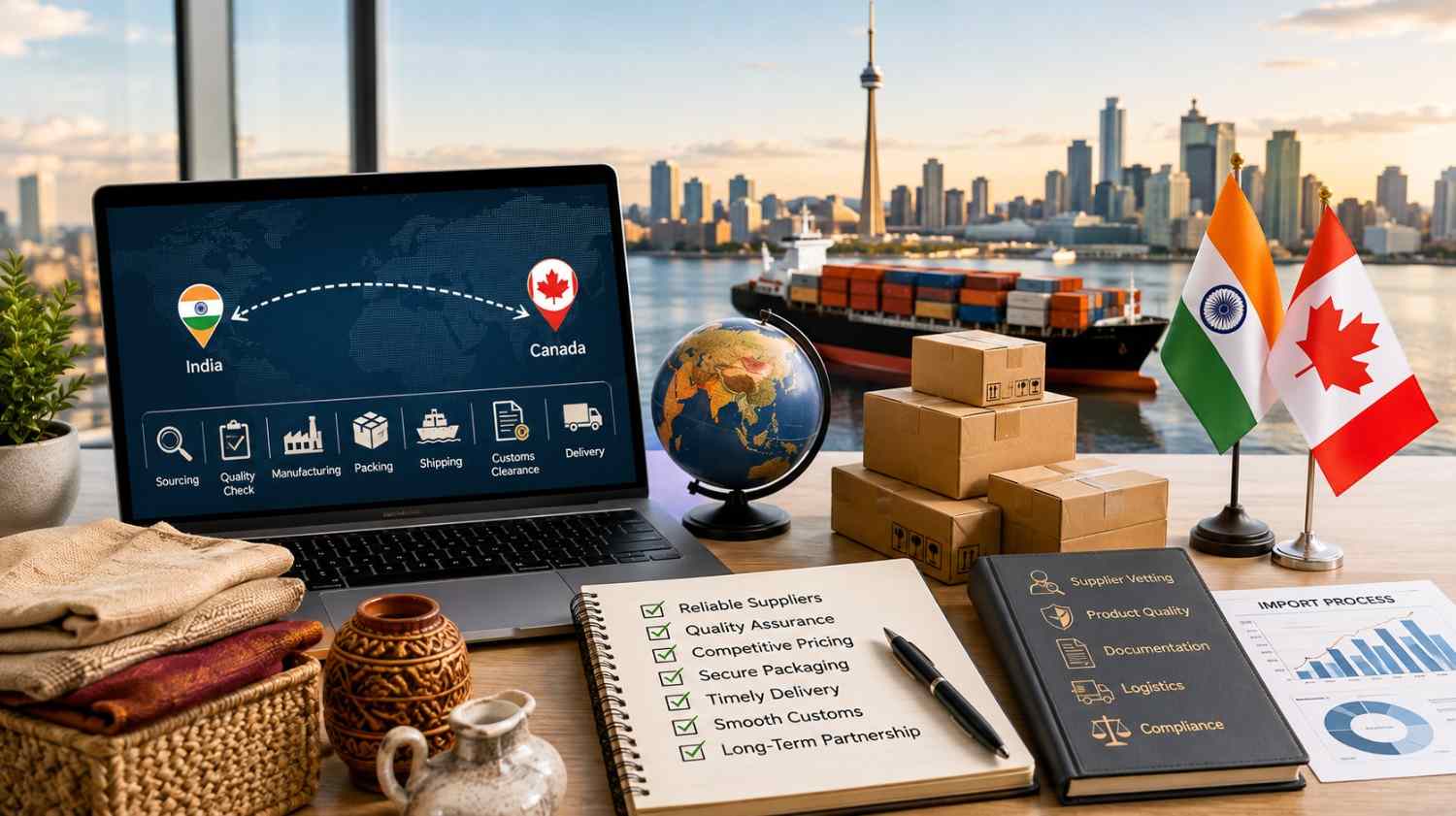
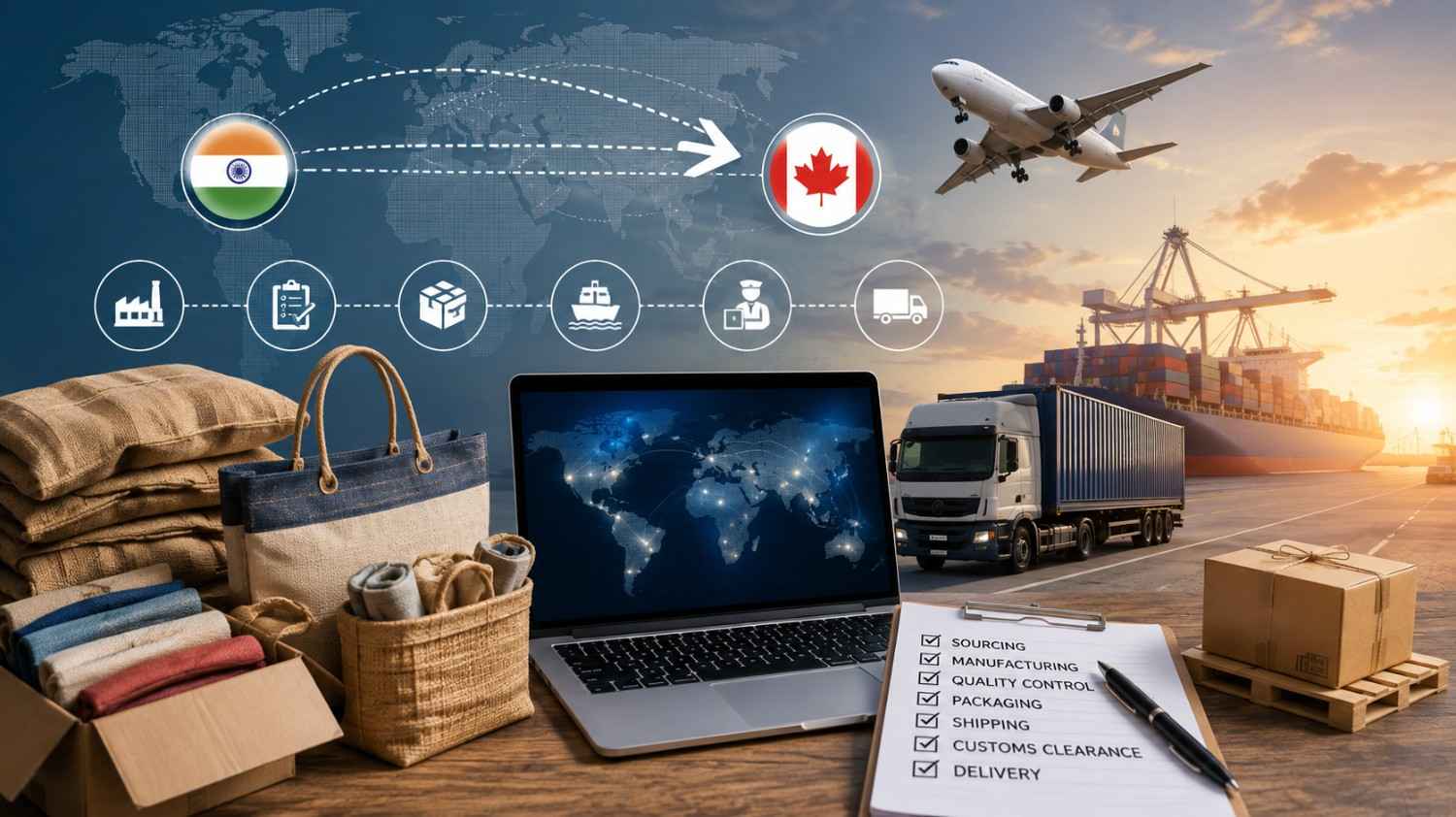
Modern businesses increasingly depend on reliable international supply chains to source products, control costs, maintain quality, and serve customers efficiently. For Canadian and Indian businesses, cross-border sourcing can create valuable opportunities, but managing suppliers, procurement, logistics, documentation, quality expectations, and delivery schedules can become complicated as operations grow.


Canada and India already have substantial commercial connections. In 2025, two-way merchandise trade between the two countries reached $13.6 billion, while both countries continued working toward deeper commercial cooperation and stronger supply-chain relationships.

For businesses looking to source products from India for Canadian markets, or Canadian products and services for Indian customers, a structured global sourcing and procurement strategy can make the process more efficient and predictable.


Why Global Sourcing Matters for Growing Businesses

Global sourcing is more than finding a supplier offering the lowest price. Successful sourcing considers product specifications, supplier capability, quality, lead times, transportation, landed costs, communication, and long-term reliability.


Canadian businesses sourcing from India may gain access to established manufacturing and supply networks across sectors such as textiles, apparel, processed foods, technology, manufacturing, and other commercial categories. India is also identified by Canada’s Trade Commissioner Service as an attractive market across areas including agriculture and processed foods, automotive, clean technologies, information and communications technologies, infrastructure, and life sciences.


For Indian businesses entering or expanding in Canada, the challenge can be different. Businesses need to understand Canadian customer expectations, distribution requirements, supplier relationships, inventory planning, and local market positioning.

This is where professional procurement and vendor management can provide meaningful value.


Strategic Supplier Sourcing Instead of Price-Only Purchasing

A strong sourcing strategy begins with understanding exactly what the business needs. Product specifications, expected volumes, quality standards, packaging requirements, delivery schedules, target costs, and preferred commercial terms should be established before approaching suppliers.


Supplier selection should then consider more than the quoted unit price. Production capability, consistency, communication, lead time, quality processes, responsiveness, and capacity for repeat orders can all affect the actual cost of doing business.


Canada’s Trade Commissioner Service describes strategic sourcing as a structured process involving supplier identification, quotation review, negotiation, supplier selection, production validation, and transportation planning.

A supplier offering a slightly higher unit price may ultimately provide better value if it delivers consistent quality and dependable lead times.


Wholesale Procurement Built Around Total Cost

Wholesale procurement should focus on total landed cost, not simply the supplier’s quoted price.

A product purchased at a low factory price can become significantly more expensive after freight, insurance, duties, brokerage, warehousing, currency considerations, and domestic transportation are included.


Businesses should therefore compare suppliers using a complete cost picture. This approach makes it easier to determine whether sourcing from India, Canada, or another market actually improves the economics of the product.

For Canadian and Indian businesses, currency differences can also influence purchasing decisions. Procurement planning should account for exchange-rate movements and payment terms when evaluating long-term supplier relationships.


Logistics Connects Sourcing With Delivery

Finding the right supplier is only one part of international procurement. Products must also move efficiently from the supplier to the final destination.


International logistics can involve supplier pickup, freight forwarding, documentation, customs coordination, port or airport handling, warehousing, and final delivery. Canada’s Trade Commissioner Service identifies inbound, outbound, reverse, and third-party logistics as important components of supply-chain operations.


For a Canadian company sourcing from India, for example, a well-planned logistics process can help coordinate the movement of goods from an Indian supplier through international transportation and into Canadian distribution channels.


Likewise, Indian businesses sourcing Canadian products need a dependable process for coordinating suppliers, transportation, inventory, and delivery into their target market.


Vendor Management Builds Long-Term Supply Stability

Once a supplier has been selected, the relationship should not simply end after the purchase order.

Effective vendor management involves ongoing communication, performance monitoring, quality evaluation, delivery tracking, issue resolution, and relationship development.


Businesses should establish clear expectations for product specifications, lead times, packaging, communication, quality checks, and order schedules. Regular supplier performance reviews can identify recurring issues before they become major disruptions.


Strong vendor relationships can also improve responsiveness when businesses need to adjust order schedules, introduce new products, modify packaging, or respond to changes in customer demand.


Quality Control Should Be Part of the Sourcing Strategy

International procurement becomes much more efficient when quality expectations are established before production begins.

Product samples, specifications, approved materials, packaging requirements, inspection procedures, and production milestones can help create a consistent quality framework.


For businesses purchasing from India, having clear product specifications and communication processes can reduce misunderstandings between buyers and suppliers. The same principle applies to Indian businesses purchasing from Canadian suppliers.

Quality management should therefore be considered part of sourcing rather than something addressed only after products arrive.


Building More Resilient Canada-India Supply Chains

Supply-chain resilience has become increasingly important for businesses operating internationally. Disruptions can result from transportation delays, changing demand, supplier capacity issues, material shortages, currency fluctuations, or other unexpected events.

A diversified supplier strategy can reduce dependence on a single source when appropriate. Businesses can also maintain alternative suppliers, establish realistic lead times, monitor inventory levels, and develop contingency plans for important products.


Canada and India are currently working toward deeper commercial cooperation, with both countries targeting stronger bilateral trade and resilient supply chains.

This creates an evolving environment in which businesses can explore new sourcing and procurement opportunities while maintaining disciplined supply-chain planning.


Technology Makes Procurement More Transparent

Digital procurement and supply-chain tools can make international purchasing easier to monitor. Businesses can use centralized systems to track purchase orders, supplier information, inventory, delivery schedules, invoices, product specifications, and performance data.


Clear documentation also improves communication between procurement teams, suppliers, logistics partners, warehouses, and finance departments.

For businesses managing suppliers across Canada and India, having organized information in one place can reduce communication gaps and make it easier to identify delays, cost changes, and supplier performance trends.


Global Sourcing Should Support Business Growth

The ultimate purpose of sourcing and procurement is not simply to purchase products. It is to help businesses operate more efficiently and create sustainable commercial growth.


Canadian businesses can explore Indian supplier networks to develop competitive product lines, while Indian businesses can use Canadian suppliers and market relationships to expand their commercial opportunities. Canada’s current trade strategy also emphasizes diversification beyond traditional markets, with India identified as an important growth market.

A well-managed sourcing model can connect supplier discovery, procurement, quality management, logistics, inventory, and vendor relationships into one coordinated process.


Complete Consulting Canada for Global Sourcing and Procurement

Complete Consulting Canada helps businesses evaluate and coordinate international business opportunities with a focus on practical sourcing, procurement, vendor coordination, logistics planning, and cross-border business requirements. For companies operating between Canada and India, the right support can help connect supplier discovery with purchasing, logistics, quality expectations, and ongoing vendor relationships.


Whether a Canadian business is exploring Indian suppliers or an Indian company is seeking opportunities in the Canadian market, an organized procurement strategy can create greater visibility across the supply chain. With Canada and India continuing to strengthen commercial relationships, businesses that build reliable sourcing and vendor-management systems can be better positioned to identify opportunities and manage international growth.

Frequently Asked Questions

Global sourcing is the process of identifying and working with suppliers across international markets to obtain products, materials, or services based on factors such as quality, cost, capacity, lead time, and business requirements.

Canadian businesses can identify suitable Indian suppliers, evaluate product specifications and pricing, review samples, assess supplier capabilities, coordinate procurement, and arrange international logistics and delivery based on their requirements.

Sourcing focuses primarily on identifying, evaluating, and selecting suppliers, while procurement covers the broader purchasing process, including purchase orders, supplier communication

Vendor management helps businesses maintain consistent communication, monitor supplier performance, manage quality expectations, address issues, and develop reliable long-term supplier relationships.

Businesses can evaluate total landed cost rather than only supplier pricing, compare multiple suppliers, negotiate appropriate commercial terms, optimize shipment planning, and improve inventory and purchasing processes.

Yes. Businesses can work with logistics providers and third-party logistics partners for transportation, warehousing, distribution, and other supply-chain activities. The appropriate model depends on the company’s products, markets, delivery requirements, and operational structure.

It can be suitable when product requirements, supplier capabilities, costs, logistics, and order economics are carefully evaluated. Small businesses can benefit from structured sourcing processes that help them identify appropriate suppliers without relying solely on price.

Annual Filing Rules Every Non-Resident Indian Company Owner Must Know

Annual Filing Rules Every Non-Resident Indian Company Owner Must Know

Running a Canadian company while living outside Canada can create additional responsibilities around annual filings, corporate records, tax reporting, and business information. For Non-Resident Indian (NRI) company owners, understanding these requirements is important because owning or managing a Canadian corporation from abroad does not automatically remove the company’s Canadian filing obligations.


The exact requirements depend on how the company was incorporated, where it operates, its fiscal year, and the nature of its Canadian activities. Federal corporations, for example, have annual corporate filing requirements separate from their income tax reporting. Corporations Canada confirms that every active federal business corporation must file an annual return each year.


For NRI entrepreneurs operating Canadian businesses from India or another country, keeping these obligations organized can help maintain the company’s active status and support smoother financial administration.


Annual Return and Tax Return Are Different

One of the most important distinctions for Canadian company owners is that a corporate annual return and a corporate income tax return are not the same document.


A federal corporation generally files its annual return with Corporations Canada to keep corporate information current. The annual return is due within 60 days following the corporation’s anniversary date for applicable federal corporations.


The corporate income tax return, commonly known as the T2, is filed separately with the Canada Revenue Agency (CRA). The filing requirement depends on the corporation’s circumstances and activities during the tax year.

Understanding this distinction is especially important for an NRI business owner because completing one filing does not necessarily satisfy the other.


Federal Corporations Have Annual Filing Responsibilities

If an NRI entrepreneur owns an active corporation incorporated federally under the Canada Business Corporations Act, the corporation generally needs to submit its annual return every year.


Corporations Canada states that the annual return helps keep corporate information up to date and that active corporations remain responsible for filing even when they are not currently operating.


The filing also includes information concerning individuals with significant control where applicable. Since January 22, 2024, federal corporations have been required to provide this information with their annual return.

For an owner living in India, keeping shareholder, director, registered office, and corporate information current is therefore an important part of maintaining the company’s records.


T2 Corporate Tax Filing Can Apply to Non-Resident Corporations

A separate issue arises when a corporation itself is considered non-resident for Canadian tax purposes.


The CRA states that a non-resident corporation generally has to file a T2 return when it carried on business in Canada, had a taxable capital gain, or disposed of taxable Canadian property during the tax year.


Importantly, the CRA states that a filing requirement can still exist even when a corporation claims that income or gains are exempt from Canadian tax under a tax treaty.

This means an NRI entrepreneur should not assume that living outside Canada means the company’s Canadian reporting requirements automatically disappear.


Know Your Corporate Fiscal Year

A company’s fiscal year is important because it determines when its T2 return is due.

The CRA states that a T2 return generally must be filed within six months after the end of the corporation’s tax year. For example, a corporation with a June 30 year-end generally has a December 31 filing deadline.


This makes calendar management particularly important for NRI owners who may be managing Canadian operations remotely. Keeping the corporate fiscal year, accounting records, banking information, invoices, expenses, and supporting documents organized can make annual reporting considerably easier.


Keep Corporate Information Updated

Annual compliance is not limited to submitting forms. Corporate information should remain accurate throughout the year.


Changes involving directors, corporate addresses, ownership information, significant-control information, or other corporate details may require appropriate updates depending on the corporation’s jurisdiction and circumstances.


Federal corporations are expected to keep their information current through the annual return process, while other updates can have separate requirements. Corporations Canada emphasizes that annual filings help keep its corporate database up to date.


For NRI owners, this is particularly useful because remote business management can make it easier for corporate information to become outdated.


Non-Resident Owners Should Pay Attention to Canadian Business Activity

Simply living outside Canada does not provide a complete answer about a company’s Canadian tax reporting obligations.


The CRA explains that corporate residency can involve several factors and that a corporation may be considered resident in Canada under applicable rules even in circumstances where its incorporation history or management arrangements require further analysis.


Similarly, a non-resident corporation carrying on business in Canada can have T2 filing responsibilities.


For an NRI entrepreneur, this makes it important to understand the relationship between the company’s incorporation, management, Canadian business activities, income, and tax reporting position.


Maintain Records Throughout the Year

Waiting until the annual filing deadline to organize business information can create unnecessary pressure.


Canadian company owners should maintain organized accounting records, invoices, expense documentation, bank information, payroll records where applicable, corporate documents, and relevant business transactions throughout the year.


For NRI owners managing operations from India, digital accounting systems and structured document management can make communication with Canadian accounting professionals easier. It can also help ensure that financial information is available when corporate and tax filings need to be prepared.


Canada and the USA Considerations for Growing Businesses

Many NRI entrepreneurs establish Canadian companies while serving customers in both Canada and the USA. Expanding across borders can create additional accounting and reporting considerations because transactions, sales, expenses, currencies, and business activities may span multiple markets.


The Canadian reporting position should therefore be considered alongside the company’s actual operations rather than based solely on where the owner personally lives.


A business serving customers in Canada and the USA may need a more structured approach to bookkeeping, financial reporting, corporate records, and year-end preparation as it grows.


Complete Consulting Canada for NRI Business Owners

Complete Consulting Canada supports entrepreneurs and business owners with Canadian business and consulting needs, including assistance for individuals managing businesses from outside Canada. For NRI entrepreneurs operating businesses connected to Canada and the USA, having an organized approach to corporate administration, accounting coordination, documentation, and annual filing preparation can make ongoing business management easier.


Annual filing requirements should never be treated as a once-a-year task. For an NRI company owner, staying organized throughout the year can help prevent missed deadlines, outdated corporate information, and last-minute financial preparation. Understanding the difference between corporate annual returns and T2 reporting is a strong starting point for maintaining an organized Canadian business structure.

Frequently Asked Questions

If the company is an active federal corporation, it generally has to file its annual return with Corporations Canada each year. The annual return is separate from the corporate income tax return.

No. The annual return is filed with Corporations Canada, while the T2 is the corporation’s income tax return filed with the CRA. They serve different purposes and have different filing requirements.

Not automatically. Filing requirements depend on the corporation’s structure, jurisdiction, activities, and tax circumstances. A Canadian federal corporation can have annual corporate filing obligations even when its owner lives outside Canada.

For applicable federal business corporations, the annual return and information concerning individuals with significant control are generally due within 60 days following the corporation’s anniversary date.

A non-resident corporation generally needs to file a T2 when it carried on business in Canada, had a taxable capital gain, or disposed of taxable Canadian property during the tax year, subject to applicable exceptions.

A T2 return generally has to be filed within six months after the end of the corporation’s tax year.

Yes, many business owners manage their Canadian corporate administration remotely. However, maintaining accurate records, tracking deadlines, and working with qualified Canadian accounting professionals can help keep the company’s annual reporting organized.

Corporate Compliance Checklist for Non-Resident Canadian Companies Owned from India

Corporate Compliance Checklist for Non-Resident Canadian Companies Owned from India

Owning a Canadian company while managing the business from India can create valuable opportunities for entrepreneurs serving customers across Canada and the USA. However, maintaining the company after incorporation is just as important as setting it up. A well-organized corporate compliance process helps keep company records, tax filings, registrations, financial information, and reporting responsibilities current.


For Indian entrepreneurs with a Canadian company, compliance can become more complex because the business may involve cross-border ownership, international payments, Canadian customers, Indian operations, and transactions between related parties. Understanding the recurring responsibilities can make ongoing management much smoother.


Maintain Accurate Corporate Records

A Canadian corporation should maintain organized corporate records throughout the year. These records can include incorporation documents, shareholder information, director information, resolutions, registers, financial statements, and important company agreements.


For an Ontario corporation, annual corporate reporting requirements should also be monitored. Ontario’s Corporations Information Act requires corporations to file an annual return, subject to applicable exemptions.


When ownership and management are based in India, keeping digital copies of corporate records and maintaining an organized Canadian corporate file can make annual administration easier.


Keep the Company Information Updated

Changes to directors, officers, registered information, ownership details, or other corporate information should be reviewed and updated when required. Delaying corporate updates can create inconsistencies between company records, banking information, tax accounts, and other business documents.


For an Indian-owned Canadian company, it is especially important that the information held by the corporation remains consistent across Canadian and Indian business records.


Monitor Canadian Corporate Tax Filing Requirements

Tax compliance is one of the most important areas for a Canadian company owned from India. Depending on the company’s residency, activities, income, and structure, a Canadian corporate income tax return may be required.


A corporation carrying on business in Canada generally has T2 filing responsibilities, and the return is normally due within six months of the end of the corporation’s tax year. Certain non-resident corporations may also have T2 filing obligations when they carry on business in Canada or meet other specified conditions.


This means that an Indian owner should not assume that having no Canadian tax payable automatically means there is no filing requirement.


Review GST/HST Responsibilities

GST/HST should be reviewed according to the company’s activities, customers, revenue, and registration status. If a business is registered for GST/HST, it has responsibilities that include charging and collecting applicable tax, filing GST/HST returns, and remitting amounts collected.


This can be particularly important for Indian entrepreneurs operating Canadian eCommerce stores, consulting companies, technology businesses, agencies, and other service-based companies.


Separate Canadian and Indian Business Transactions

Cross-border financial management should be handled carefully. Canadian revenue, Indian operating expenses, transfers between related businesses, shareholder transactions, and international payments should be properly documented.


A dedicated accounting system can help distinguish Canadian company transactions from the owner’s personal finances and from transactions involving an Indian business.


For businesses with connected entities in India and Canada, transaction documentation and appropriate accounting treatment become increasingly important as the company grows.


Understand Corporate Residency Considerations

Corporate residency is an important consideration for businesses managed across borders. Incorporation in Canada and the location from which the company is managed can have different implications.


The CRA explains that corporate residency can involve statutory rules as well as common-law principles, and treaty provisions can become relevant when dual-residency questions arise.


For an Indian entrepreneur who owns and manages a Canadian company from India, this area should be reviewed carefully with qualified cross-border accounting professionals so that the Canadian and Indian reporting positions remain coordinated.


Keep Financial Statements and Accounting Up to Date

Good bookkeeping is the foundation of ongoing corporate compliance. Monthly or quarterly bookkeeping can help track revenue, expenses, receivables, payables, shareholder transactions, international transfers, and tax-related amounts.


Maintaining current financial records also makes year-end accounting and corporate tax preparation more efficient. It can help business owners understand whether the company is profitable and identify financial issues before they become larger problems.


Review Payroll and Payment Obligations

If the Canadian company employs workers or pays individuals for services, payroll and related reporting requirements should be reviewed according to the company’s circumstances.


The same applies when the company makes payments to non-residents. Cross-border payments can have specific reporting or withholding considerations, so the nature of each payment should be properly documented before it is processed.


Prepare for Annual Compliance in Advance

Compliance should not be treated as a once-a-year activity. A better approach is to maintain a recurring corporate calendar covering annual corporate filings, tax deadlines, GST/HST reporting periods, bookkeeping, financial statements, corporate record updates, and other applicable reporting dates.


For Indian owners, planning ahead is particularly valuable because Canadian and Indian financial years, accounting processes, and reporting requirements may not always align.


Keep Your Canadian Company Compliance-Ready

Maintaining a Canadian company from India requires more than completing the initial incorporation process. Regular corporate record maintenance, annual reporting, tax filings, GST/HST reviews, bookkeeping, financial documentation, and cross-border accounting coordination can help create a stronger foundation for long-term growth across Canada and the USA.


Complete Consulting Canada helps entrepreneurs and international business owners understand Canadian company setup, corporate administration, accounting coordination, and ongoing business requirements. If your Canadian company is owned or managed from India, establishing a consistent compliance process can help you stay organized while focusing on business growth.

Frequently Asked Questions

Yes, an Indian resident can own a Canadian company, subject to the applicable corporate structure and requirements. The ongoing responsibilities depend on the company’s activities, ownership, management, and tax position.

Potentially, yes. Canadian and provincial corporate reporting requirements can apply depending on the company’s structure and jurisdiction. Ontario corporations, for example, generally have annual return requirements.

A non-resident corporation may need to file a T2 return when it carries on business in Canada, disposes of taxable Canadian property, has a taxable capital gain, or meets other applicable filing conditions.

It can. GST/HST responsibilities depend on the company’s activities, registration status, taxable supplies, revenue, and other factors. Registered businesses have specific collection and filing responsibilities.

Yes. Keeping clear records for Canadian and Indian business activities makes accounting, financial reporting, cross-border transaction tracking, and tax preparation considerably easier.

It can raise important cross-border residency considerations. Corporate residency can involve incorporation, management and control, statutory rules, and applicable treaty provisions.

A structured compliance calendar, accurate bookkeeping, organized corporate records, timely tax reporting, and professional cross-border accounting support can help Indian entrepreneurs manage their Canadian companies more efficiently.

How to Start Your Own Business in Ontario as a Non-Resident from India

How to Start Your Own Business in Ontario as a Non-Resident from India

Starting a business in Ontario from India can be an attractive way to reach Canadian customers, build an international company, and expand into the Canada and USA markets. For Indian entrepreneurs, the process involves choosing the right business structure, preparing incorporation information, understanding Canadian tax responsibilities, and establishing an efficient operating framework.


The good news is that being based in India does not automatically prevent you from establishing a business presence in Ontario. However, the requirements can differ depending on whether you create an Ontario corporation, establish a federal corporation, or register an existing Indian company to operate in Canada.


Choosing the Right Business Structure in Ontario

The first important decision is selecting an appropriate business structure. Entrepreneurs commonly consider an Ontario corporation or a federal corporation depending on their intended market and long-term expansion plans.


Ontario incorporation can be suitable when your primary business operations are focused within Ontario. A federal corporation may be more appropriate when you expect to operate across multiple Canadian provinces. A federally incorporated company can operate in Ontario, although additional provincial registrations may be required when conducting business in particular provinces.


For an Indian entrepreneur, this decision should be made alongside an assessment of ownership, management, banking, taxation, business activities, and future expansion.


Can an Indian Resident Own a Business in Ontario?

An entrepreneur living in India can explore establishing a Canadian business structure without being physically based in Ontario. However, ownership and director requirements depend on the structure selected.


Ontario’s corporate rules have specific provisions concerning director residency, including exceptions and provisions for corporations classified as non-resident corporations. Because the rules can depend on the corporation’s circumstances, it is important to determine the applicable structure before incorporation.


This is particularly important for Indian founders who want to retain ownership and management from India while building a Canadian commercial presence.


Registering the Business and Obtaining a Business Number

Once the structure has been selected, the next stage involves business registration and obtaining the appropriate identification and tax accounts.


Ontario’s online business registration system provides registration services for business corporations. A corporation registration currently carries a listed fee of $300, while a name-based corporation may also require an Ontario-biased or weighted Nuans name search report.


A Canadian Business Number, commonly called a BN, is also important for businesses that need federal tax program accounts. The Canada Revenue Agency provides a specific registration process for businesses located outside Canada and for non-resident businesses conducting activities in Canada. Depending on the business, accounts such as corporation income tax, GST/HST, payroll, or import/export may be relevant.


Understanding Tax Responsibilities Between India and Canada

Cross-border taxation should be considered before starting operations. An Indian-owned Canadian business can have Canadian tax obligations depending on its corporate structure, income, activities, and where business management and operations occur.


Canada and India have an income tax treaty designed to address taxation issues between the two countries. The treatment of business profits can depend on factors such as whether business activities create a permanent establishment in Canada.


Corporate residency can also involve more than simply where a company was incorporated. The CRA explains that factors such as central management and control can be relevant when determining corporate residency.


For this reason, Indian entrepreneurs should plan their Canadian and Indian accounting arrangements before generating significant revenue.


Setting Up Banking, Accounting and Business Operations

After establishing the company, practical operations become the next priority. Depending on the business model, you may need a Canadian business bank account, accounting system, payment processing, bookkeeping support, insurance, contracts, suppliers, employees, or Canadian service providers.


Your operating model should clearly separate personal finances from company finances and maintain accurate records of Canadian and international transactions. If your business sells products or services to customers in Canada, GST/HST requirements should also be reviewed according to the nature and scale of your activities. Non-resident businesses can have specific GST/HST considerations, particularly when they have business activities or a permanent establishment in Canada.


Building a Business That Can Grow Across Canada and the USA

Ontario can provide an excellent starting point for entrepreneurs targeting Canadian customers while also planning expansion into the USA. A strong business foundation should include a clear market strategy, professional website, Canadian payment options, appropriate accounting processes, customer support, and a scalable digital marketing strategy.


For Indian founders, it is also valuable to create a business structure that supports international invoicing, cross-border payments, supplier relationships, eCommerce, consulting services, technology services, or other commercial activities without unnecessary complexity.


Start Your Ontario Business With the Right Foundation

Starting a business in Ontario from India is an opportunity to build a Canadian commercial presence while serving customers across Canada and potentially expanding into the USA. The right approach begins with selecting a suitable structure, organizing registration and tax requirements, establishing efficient financial systems, and creating a practical cross-border business strategy.


Complete Consulting Canada helps entrepreneurs understand the Canadian business setup process and plan their business structure, registration, accounting coordination, and expansion strategy. If you are an Indian entrepreneur planning to start a business in Ontario, working with experienced Canadian business consultants can help you approach the process with greater clarity and confidence.

Frequently Asked Questions

Yes, an Indian resident can explore establishing a business presence in Ontario without being physically based there. The appropriate corporate structure and applicable requirements depend on the nature of the business and ownership arrangement.

Not necessarily. Ownership and residency considerations are separate from simply being an entrepreneur who lives in India. The specific corporate structure should be reviewed before registration.

It depends on your growth plans. Ontario incorporation can work well for an Ontario-focused business, while federal incorporation can be attractive for businesses planning operations across Canada.

A Business Number may be required when a business needs applicable Canadian tax or program accounts. Non-resident businesses have a dedicated registration process for obtaining a BN and relevant accounts.

Potentially, yes. Tax treatment depends on the company’s structure, activities, residency, income, and other factors. The Canada-India tax treaty may also affect how cross-border business income is treated.

Yes. A properly structured business can develop customers across Canada and expand internationally, although additional registrations, tax considerations, and commercial requirements may apply depending on where and how it operates.

Before registration, founders should clarify their business model, ownership structure, expected Canadian activities, taxation considerations, banking requirements, and expansion plans. Getting the structure right at the beginning can make future growth considerably easier.